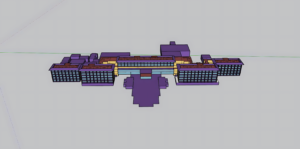
As part of SBVN’s in-depth technical analysis series, Showcase #8 explores a real-world case study on energy design optimization for a mixed-use development in Hoa Binh Province, including a highway rest stop, a local agricultural marketplace, and an office building. By leveraging Building Energy Modeling (BEM), building performance analysis, and investment scenario evaluation, SBVN identified the most cost-effective design strategies to enhance energy performance while minimizing both capital expenditure (CAPEX) and long-term operating costs (OPEX), laying a solid foundation for the project’s sustainability objectives.
1. General Project Information
- Project: Rest stop combined with a local agricultural market and an office building
- Location: Hoa Binh, Vietnam
- Project Target: Optimize energy efficiency, control operational costs, target Net Zero Energy, and achieve international green building certifications.
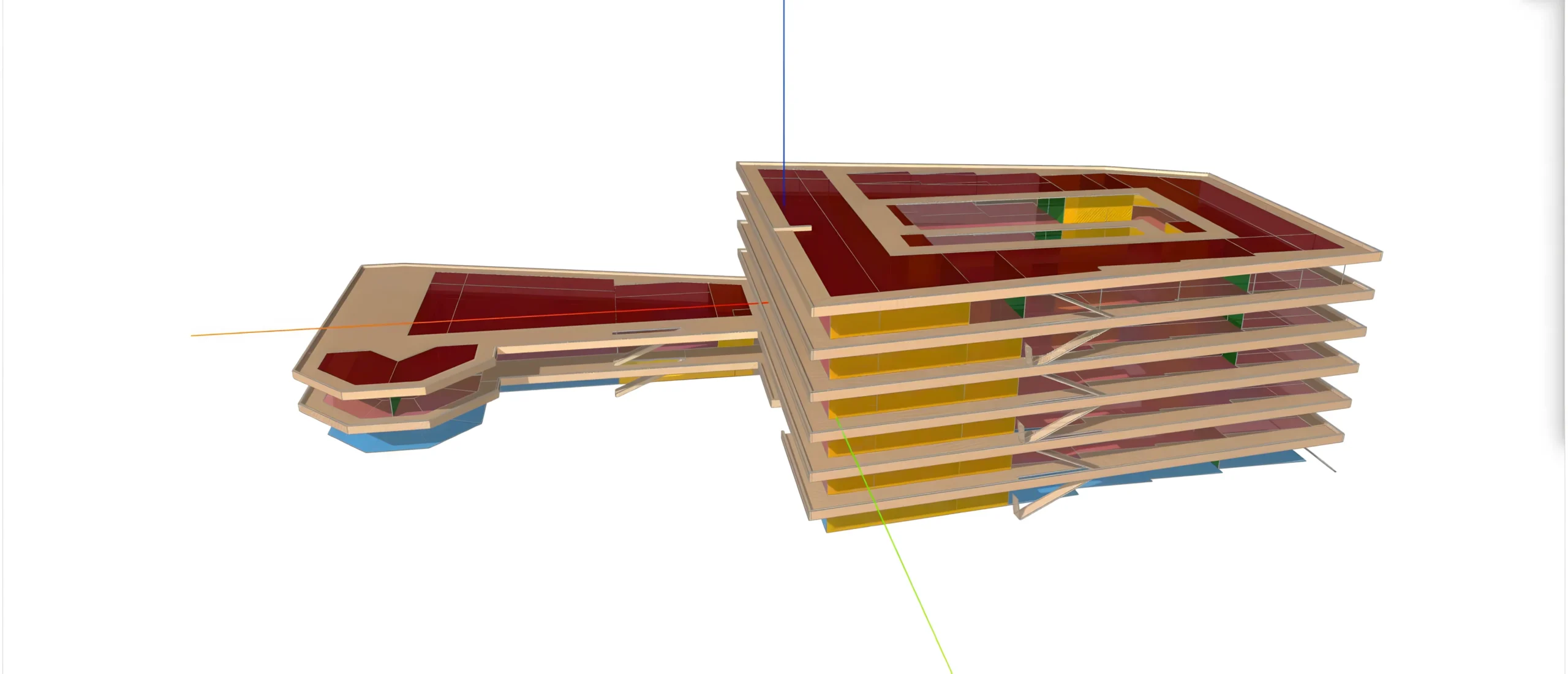
- Scope of Work: SBVN conducted a comprehensive review, developed a 3D thermophysical model, and performed building energy performance analysis to propose solutions that improve thermal comfort and optimize initial capital investment.
2. Key issues to note at the time SBVN received the project documentation
During the project analysis, we identified several common design pitfalls that typically undermine the goal of optimizing cash flow:
- Many current projects focus on achieving green building certification by completing the easiest checklist items while neglecting a thorough energy economics assessment. Designing the HVAC system and the building envelope using conventional approaches does not deliver core benefits. In fact, it can lead to increased capital expenditure for the investor due to oversized equipment and missed optimization opportunities.
- In tropical climates like Vietnam, the use of large glass curtain walls creates a modern aesthetic but introduces significant risks of excessive solar heat gain when the appropriate glazing coefficients are not selected. A prevalent issue today is that buildings suffer from severe glare, forcing occupants to close blinds and turn on artificial lighting during daytime hours. This inadvertently eliminates the potential for natural daylighting while simultaneously adding thermal load to the HVAC system.
3. Opportunities to improve the project’s energy efficiency while reducing investment costs
To optimize capital investment and ensure long-term operational efficiency, SBVN proposed the following core technical solutions based on results derived from the thermophysical calculation model and Building Energy Modeling (BEM) analysis:
- Facade Optimization: To address the challenges of solar radiation and east–west glare control, SBVN recommended maintaining continuous corridors wrapping around the building perimeter, creating a layer of passive shading. This was combined with the use of high-quality envelope materials: Neotech brick walls (U-value = 0.625 W/m²·K) and roof assemblies (U-value = 0.62 W/m²·K). Notably, high-performance glazing (SHGC: 0.27, VLT: 0.5, U-value: 1.67 W/m²·K) was specified. As a result, the glare-affected area was controlled to only 5.92%, meeting the extremely stringent requirements of LEED. Despite reducing glare, the building still excellently maintained 86% of floor area achieving an average natural daylight illuminance exceeding 300 lux year-round, earning the maximum score (3 credits) for the Daylighting category under the LEED standard.
- HVAC System Optimization: Once the building envelope effectively blocks heat gain, the HVAC system no longer needs to operate at high capacity. SBVN replaced the conventional system with a high-performance design comprising:
- Primary Air Unit (PAU)
- Energy Recovery Ventilator (ERV): A high-efficiency heat recovery system to reduce cooling losses during air exchange, in compliance with ASHRAE standards.
- Variable Refrigerant Flow (VRF) System: A high-efficiency central air conditioning system that precisely distributes cooling loads to individual zones.
- Renewable Energy Integration Toward Net Zero: To offset the remaining electrical energy consumption, a 3,280 m² solar photovoltaic (PV) panel system was calculated and designed for installation. This strategic measure would bring the building to the Net Zero Energy threshold.
4. Economic and technical results of the proposed solutions
- Capital Expenditure (CAPEX) Optimization: By investing in a high-performance facade to block heat gain, SBVN helped the investor downsize the oversized HVAC capacity. This resulted in a direct reduction of 7.99 billion VND in HVAC equipment procurement costs (from 18.44 billion VND down to 10.45 billion VND). In summary, despite the additional 12.18 billion VND investment in the solar PV system, the total project investment for the full Net Zero scenario increased by only 4.18 billion VND — an increase of just 18.47% — to achieve the Net Zero Energy target.
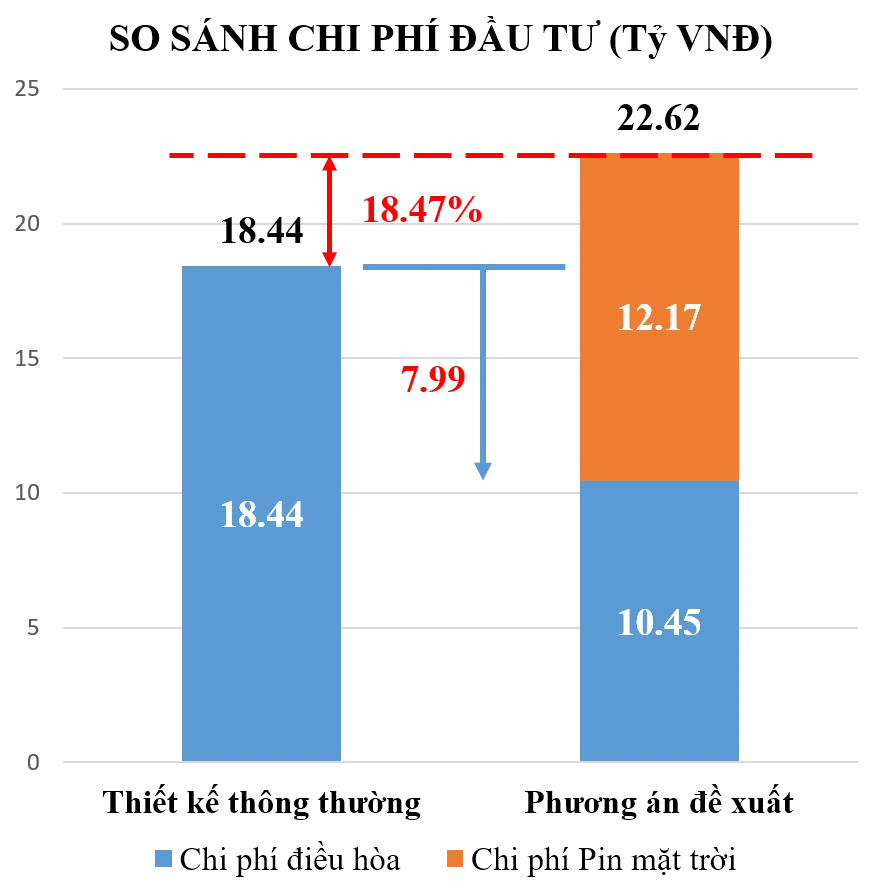
Figure 1: Capital Expenditure Comparison (Billion VND)
- Operational Expenditure (OPEX) Reduction: The new system delivers 30% total energy savings compared to a conventionally designed building following standard practice in Vietnam:
- Energy reduction equivalent to 329.2 MWh per year
- Annual electricity cost savings of 1.15 billion VN
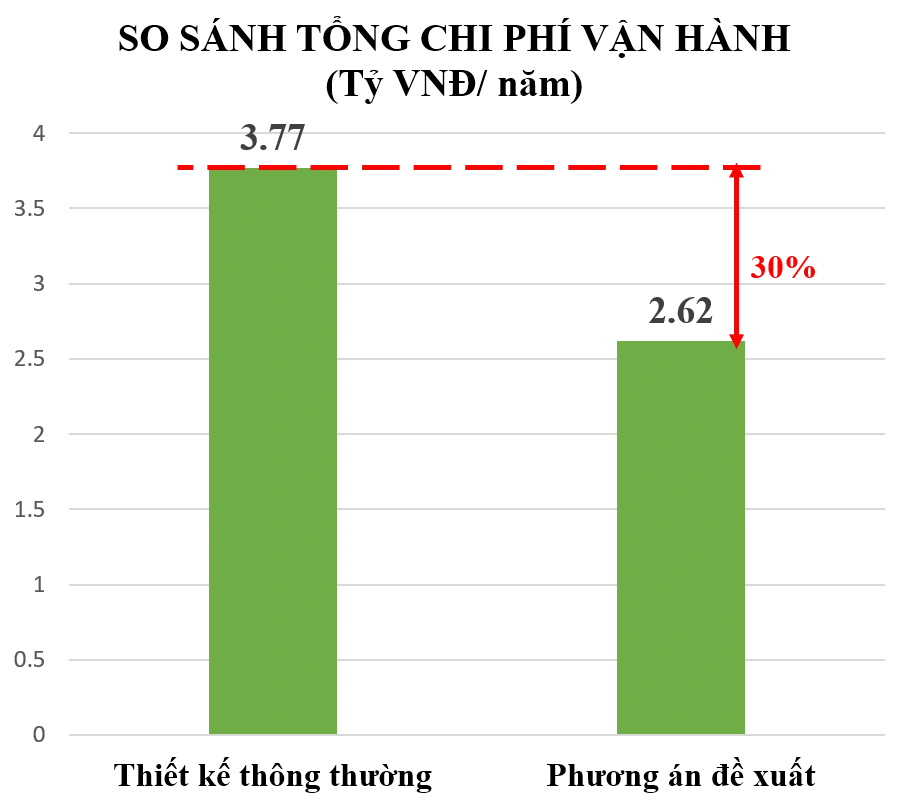
Figure 2: Annual Operating Cost Comparison (Billion VND/year)
- Environmental Impact & Return on Investment: The building reduces 270 tons of CO₂ emissions annually. Even without the solar PV system, the design itself achieves 49.76% energy savings compared to the LEED baseline, earning the maximum 17 credits in the Energy & Atmosphere category. The payback period for the solar PV investment is approximately 3.5 years.
5. Conclusion
Based on this solid technical foundation, SBVN assesses that the project has full potential to pursue LEED Platinum and LEED Net Zero Energy certifications, affirming its pioneering position in sustainable building development.
Investing in a solar PV system to achieve green building certifications and Net Zero status delivers benefits that extend far beyond operational energy savings. It elevates the project’s standing in accordance with international sustainable development standards. This forms a critical foundation for enhancing brand value, strengthening competitive advantage, and creating leverage when engaging with partners, clients, and international delegations.
Through this project, SBVN continues to demonstrate that energy performance targets and sustainable development goals can be fully achieved without necessarily increasing the total project investment. By optimizing the HVAC system design from the earliest stages, the project significantly reduced mechanical and electrical capital costs, thereby creating budget headroom to integrate the solar PV system and other sustainable solutions — all while maintaining the overall financial viability of the project.