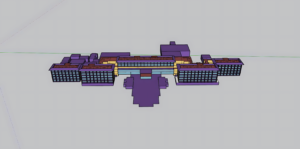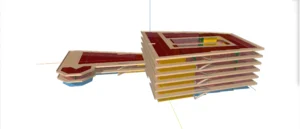

As part of SBVN’s in-depth technical analysis series, Showcase #10 presents a real-world case study on energy design optimization for the HVAC system of a high-rise hotel in Da Nang – a mixed-use development comprising a hotel, serviced apartments, office spaces, and retail facilities. Through whole-building thermal simulation using Building Energy Modeling (BEM) and comprehensive HVAC performance analysis, SBVN identified the root causes of excessive energy consumption, including an oversized chiller plant, manual system operation without a Building Management System (BMS), and aging Primary Air Units (PAUs) that no longer provided effective heat recovery.
This case study demonstrates that a fully operational hotel can achieve substantial energy cost savings without replacing its entire existing infrastructure. By evaluating and ranking eight energy optimization scenarios based on both technical performance and investment efficiency, SBVN recommended an optimal retrofit roadmap requiring an estimated CAPEX of VND 12–15 billion. The proposed solution delivers annual operating cost savings of approximately VND 6.12 billion, with a simple payback period of just 2–2.5 years. Furthermore, the project can be implemented through an Energy Service Company (ESCO) model, enabling the building owner to undertake the retrofit without any upfront capital investment.
1. General Project Information
- Project: Hotel
- Location: Da Nang, Vietnam
- Project Target: Optimize HVAC system operating costs, improve energy efficiency and aim to meet LEED green certification standards.
- Scope of Work: Build a physical thermal model of the entire building, simulate the HVAC system and hot water network, align the model with actual operating data, evaluate and propose a comprehensive upgrade roadmap.
2. Key issues to note at the time SBVN received the project documentation
When receiving the project, SBVN’s technical team realized a number of points that needed to be carefully considered – not errors easily visible to the naked eye, but hidden risks in design and operation that would be difficult to detect without in-depth analysis.
1. The chiller system is designed with a capacity that exceeds actual needs
The current design uses 4 chillers with a total capacity of 8,400 kW (not including backup), while energy simulation with 100% room capacity and 51% daytime occupancy rate shows the maximum cooling load is only 3,789 kW. This shows that the system is being designed to be more than double the actual needs.
The main reason comes from the method of calculating air conditioning load in W/m², based on experience instead of thermodynamic simulation. As a result, chillers often operate at 20–40% load, reducing performance and increasing electricity consumption.
Simulation results show that only 6,000 kW (or less) is enough to meet demand, while significantly reducing CAPEX for chillers, pipes, pumps, cooling towers, transformers and generators.
2. The chiller system is designed with a capacity that exceeds actual needs
The chiller system is operated manually and has not yet integrated BMS. Coolant temperature is currently set at 39°C/35°C, higher than normal operating levels (37°C/32°C). This causes the chiller to work at a higher pressure than necessary. Every 1°C increase in cooling water temperature can reduce chiller efficiency by 2–4%, leading to unnecessary energy consumption.
3. PAU system deterioration and air imbalance
The PAU system is designed with a larger supply flow than return to maintain positive pressure, causing air imbalance, increasing cooling load and fan power. After many years of operation, PAU no longer maintains heat recovery performance as originally designed. In the hot and humid climate of Da Nang, this reduces the ability of fresh air to process latent heat, causing the moisture processing load to accumulate on the chiller and reducing the operating efficiency of the entire system.
3. Opportunities to improve the project’s energy efficiency while reducing investment costs
SBVN developed 08 energy optimization scenarios across two strategic categories, with a consistent design approach focused on maximizing the utilization of existing infrastructure and replacing equipment only when technically and economically justified.
- Low cost (advance control and software intervention)
- High cost (upgrading hardware devices).
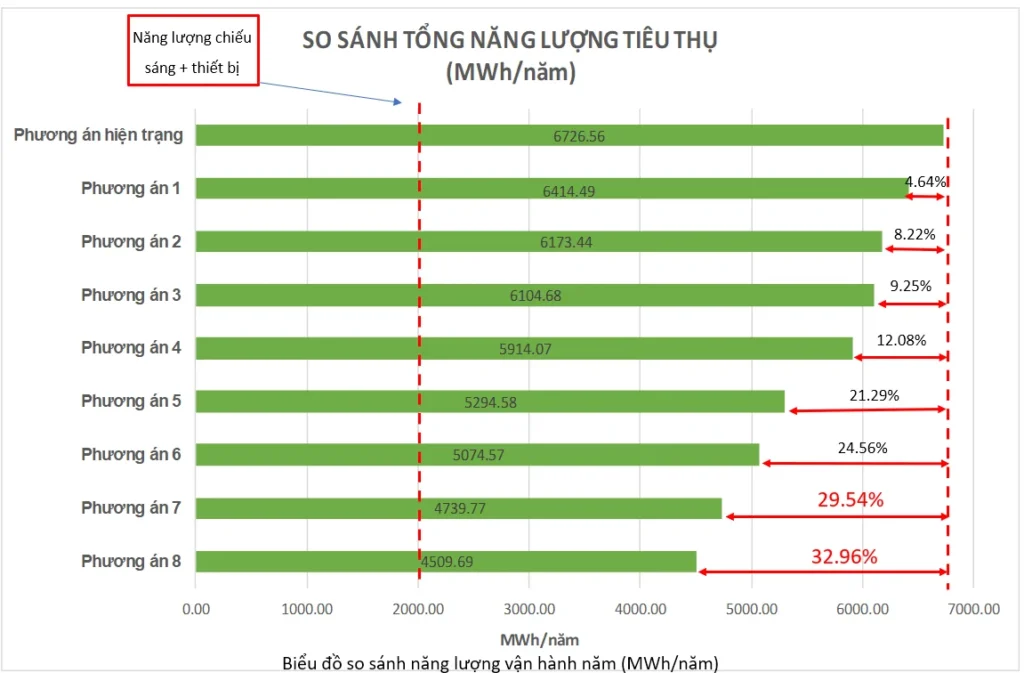
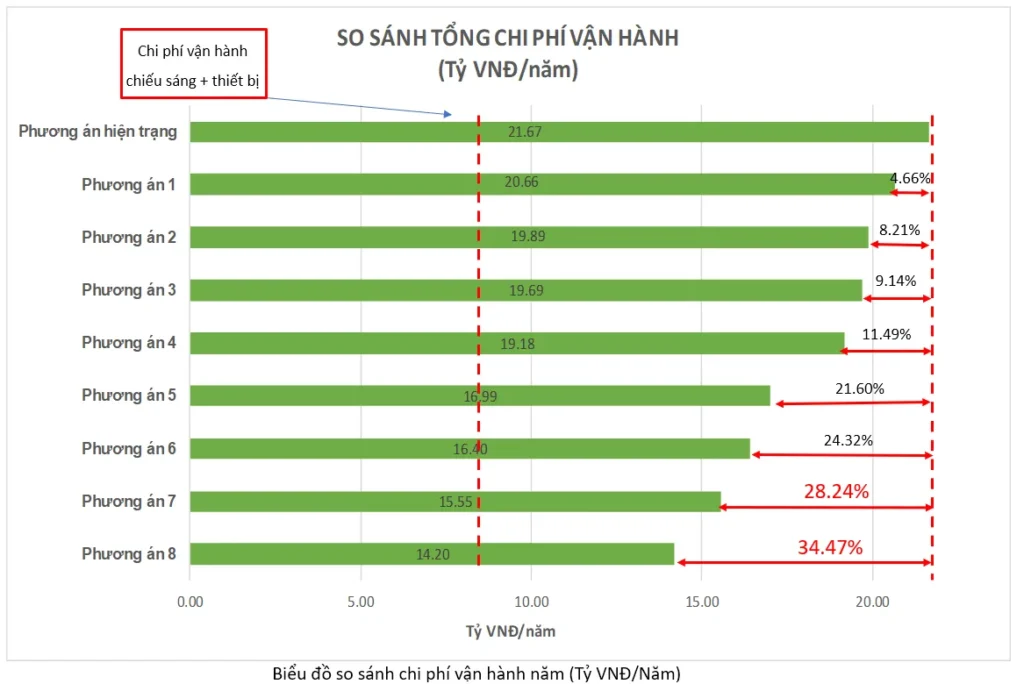
| Analysis Scenarios | Description | Total Operating Cost (VND Billion/Year) | Savings vs. Previous Scenario (VND Billion/Year) | Cumulative Savings (VND Billion/Year) |
| Baseline Scenario | – | 21.67 | – | – |
| Scenario 1 | Baseline + Control Optimization | 20.66 | 1.01 | 1.01 |
| Scenario 2 | PA1 + Pump Configuration Optimization | 19.89 | 0.77 | 1.78 |
| Scenario 3 | PA2 + Dynamic Chilled Water Supply Temperature | 19.69 | 0.20 | 1.98 |
| Scenario 4 | PA3 + PAU Heat Recovery System | 19.18 | 0.51 | 2.49 |
| Scenario 5 | PA3 + Plant Room Upgrade for High ΔT Operation | 16.99 | 2.19 | 4.68 |
| Scenario 6 | PA5 + PAU Heat Recovery System | 16.40 | 0.59 | 5.27 |
| Scenario 7 | PA6 + One Variable-Speed Chiller | 15.55 | 0.85 | 6.12 |
| Scenario 8 | Replace with a High-ΔT Chiller | 14.20 | 1.35 | 7.47 |
1. Optimize cooling tower water temperature control
This is the lowest cost solution but brings immediate results.
Instead of keeping the water temperature from the cooling tower at 35°C as currently, SBVN proposes to install an automatic control BMS/CPM system, maintaining the cooling water temperature at the lowest possible level – taking advantage of all 12 existing cooling towers.
Control test results show that: when all 12 cooling towers operate simultaneously and the return water temperature is lowered to 32°C, the total system electricity reduces from 6,604 kWh to 6,465 kWh – saving about 139 kWh per measurement cycle.
The logic here is very clear: the cooling tower fan increases a little more power, but the chiller reduces it much more thanks to working in more favorable conditions. This is a system balancing problem that most buildings in Vietnam have not yet implemented due to the lack of automatic measurement and control systems.
2. Separate pump control from chiller to increase efficiency
Currently, each pump only operates when the corresponding chiller is operating, causing the water flow to not be optimal according to the actual load. SBVN proposes to control the pump independently of the chiller, allowing many pumps to operate at low speed instead of few pumps running at maximum capacity. The solution helps reduce the power of the pump system and cooling tower without affecting chiller performance.
3. Adjust cold water temperature according to activity level
This option applies the strategy of resetting the cold water temperature according to the actual load level:
- When load is over 60%: cold water supply at 5°C (peak load mode)
- When load is below 40%: raise chilled water temperature to 11°C (low load mode, chiller works more efficiently with higher COP)
- In the range of 40 – 60%: changes linearly according to the first order function
The solution helps the chiller operate at a higher COP, while reducing heat loss on the pipes. Feasibility is about 90%, just need to confirm more data from chiller manufacturer.
4. Replace Heat Recovery PAU System
SBVN proposed to replace the 2 old PAU devices with new high-performance devices, and at the same time redesign them so that the input and return air flows are equal – instead of supplying more than the return as currently.
The new device is equipped with bypass mode: when the weather is cool, the system automatically turns off the heat recovery unit and sends fresh air straight into the building, without wasting unnecessary cooling electricity.
After replacing the PAU, the chiller will work less because the burden of handling humid heat from fresh air is largely taken care of by the PAU. The savings effect is most obvious during the peak tourist season, when visitor rates are high and outdoor temperatures are at their peak.
5. Serial Chiller Connection
This is an innovative solution in terms of system engineering: instead of two 1,400 kW chillers running in parallel, SBVN proposed a counter-flow serial connection, bringing the cold water supply temperature down to 2–3°C instead of 7°C.
6. Thiết bị thu hồi nhiệt PAU
This option simultaneously integrates the solution of connecting chillers running in series and the solution of replacing the PAU fresh air handling equipment. This combination brings great synergistic performance by both reducing cooling load from incoming fresh air and optimizing cooling performance in the engine room.
7. Adding a Small Inverter Chiller (Long-Term Solution)
The system currently lacks equipment to operate effectively at low loads. Large non-inverter centrifugal chillers often have to be turned on/off continuously when the load is below 30%, reducing efficiency and increasing wear. SBVN proposed adding a small capacity inverter chiller to operate at night and in the low season, and at the same time rotate the 2,800 kW chiller that is being used less to another project, thereby optimizing the efficiency of asset exploitation of the entire system.
8. Replace specialized high Delta T chiller
This is the most comprehensive upgrade scenario. By investing in a new generation of specialized chillers that are optimally designed from the factory to operate at high temperature deviations (Delta T), the system will achieve maximum performance. However, this solution requires a large investment and is very suitable when the current chillers are due for major maintenance or when there is a need for replacement.
4. Economic and technical results of the proposed solutions
After simulating and analyzing all 8 options, SBVN offers two options for the investor to consider depending on their goals and risk appetite.
Option 8 – Comprehensive upgrade provides the highest energy savings and operating costs, but requires large investments and a longer payback period. Appropriate plan when replacing equipment according to plan for the next 7–10 years.
SBVN recommends Option 7 – Immediate optimization, focusing on solutions with high investment efficiency and low risk such as: installing BMS/CPM, replacing high-performance PAU and adding small capacity inverter chillers. The option to keep the existing infrastructure intact, without needing to replace large chillers, with a CAPEX of about 12–15 billion VND, saving 6.12 billion VND/year and payback after about 2–2.5 years.
Results According to Option 7 (SBVN Recommendation):
- Reduced electricity consumption: 1,987 MWh/year
- Reduced operating costs: 6.12 billion VND/year
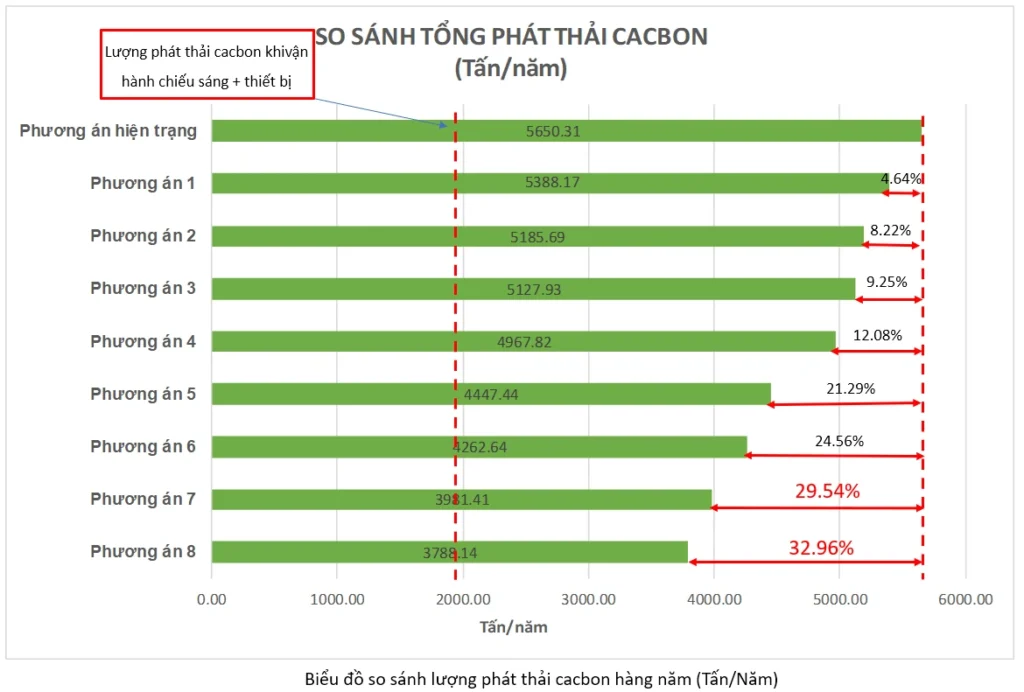
- Emission reduction: 1,669 tons CO₂/year
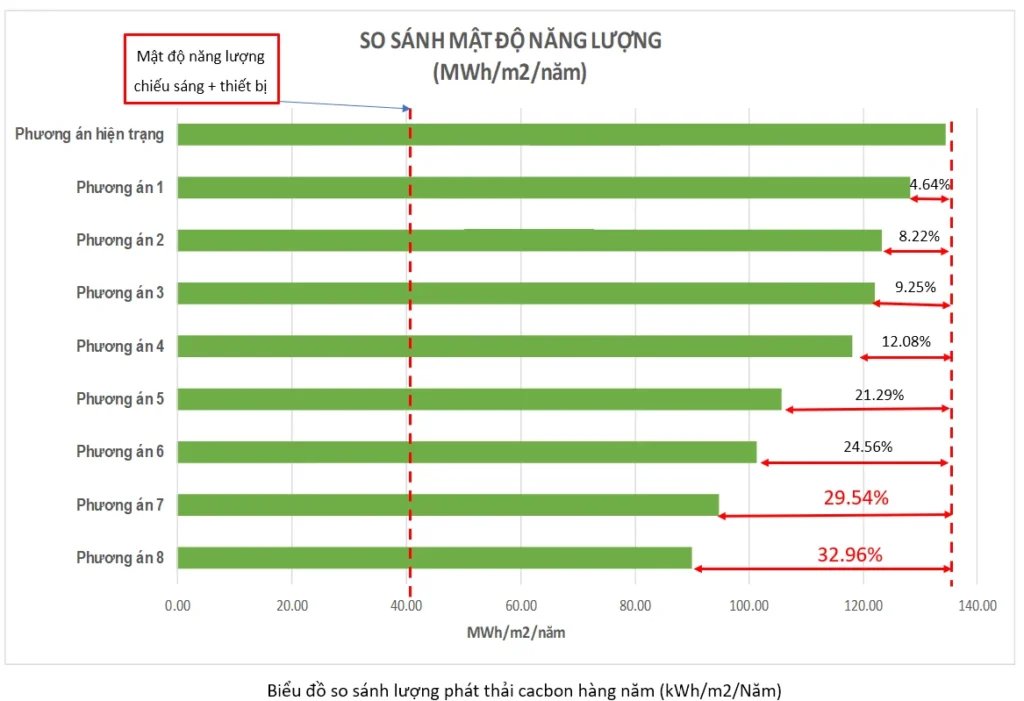
- EUI reduction: 39.71 kWh/m²/year
- CAPEX: ~12–15 billion VND
- Payback period: ~2–2.5 years
In particular, the entire plan can be implemented according to the ESCO (Energy Service Company) model: the ESCO company invests capital to buy and install equipment, commits to savings, and the hotel repays it gradually over 4-8 years from the electricity saved. Investors do not need to invest initial capital, do not bear technical risks – negative cash flow from the first year is completely eliminated.
5. Conclusion
This hotel project is not an isolated case. Most 4 – 5 star hotels and commercial buildings built in Vietnam in the period 2005 – 2020 have excess chiller capacity, lack of automatic control and suboptimal PAU systems. When applying the energy simulation and optimization process as SBVN has done, projects can save 20 – 35% of electricity costs with control solutions alone, save an additional 10 – 15% when upgrading PAU and inverter chillers, while significantly reducing CO₂ emissions, extending equipment life and supporting ESG and Net Zero goals.
Although the investment for BMS, PAU and inverter chillers usually requires about 10 – 20 billion VND, the payback period is only about 2 – 4 years and can bring 50 – 100 billion VND in profit from electricity savings over the life of the project. In the context of moving towards Net Zero 2050, energy optimization is not only a solution to reduce costs but also create a competitive advantage and meet green building requirements. Experience from the above project shows that energy simulation is an important first step, helping all investment decisions to be made on the basis of data and technical analysis instead of experience or emotion.