
Overview
The final energy consumption (climate corrected) of Slovenia increased by 4% (+0.20 Mtoe) or 0.2%/year in the period 2000-2022. The largest increase was between 2000 and 2008, by 19% (0.88 Mtoe), followed by a period (2008-2022) where energy consumption decreased due to the economic crisis (2009) and later Covid (2020). The variation in total final energy consumption was -8.9% in 2020, +5.8% in 2021 and 1.2% in 2022. In the observed period (2000-2022), transport had the highest increase in energy consumption, by 63% (0.76 Mtoe), while the energy consumption decreased in the other sectors: by 17% (-0.25 Mtoe) in industry, by 16.9% (-0.21 Mtoe) for households (with climatic correction) and in services by 16.6% (-0.1 Mtoe).

Figure 1: Final energy consumption by sector (with climatic corrections)
Energy efficiency for total final consumers, as measured by technical energy efficiency index “ODEX”, improved by an average of 1.9%/year over the period from 2000 to 2022 or 34% for the whole period. Energy efficiency improvement in industry reached 2.0%/year (or 36% in total) but the largest improvement took place in the households sector (2.5%/year or 41%). Transport (excluding international air transport) was the sector with the lowest energy efficiency improvement (1.3%/year or 25%). Efficiency improvement measured in the service sector (50% or 3.1%/year) must be considered with caution, since data before 2022 are not very reliable..
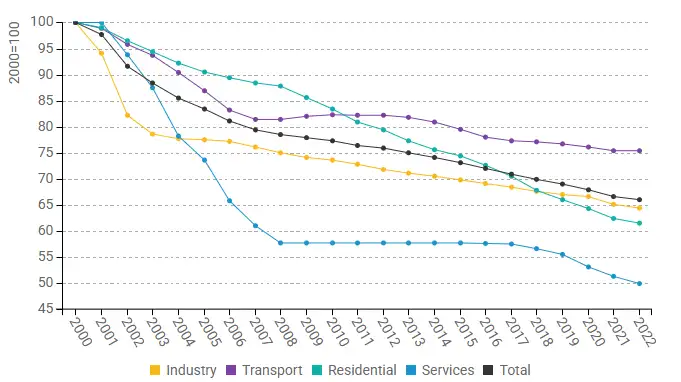
Figure 2: Technical Energy Efficiency Index
The target of National Energy Efficiency Action Plans (NEEAPs) was to limit final energy consumption below 5.12 Mtoe and primary energy consumption below 7.125 Mtoe in 2020. Slovenian The new National Energy and Climate Plan (NECP) was adopted by the Government in December 2024, setting targets for 2030. One of the key objectives of the Slovenian NECP is to ensure the systematic implementation of adopted energy efficiency policies and measures so that the total final energy consumption in Slovenia should not exceed 4.32 Mtoe (50.2 TWh) by 2030.
Slovenian government adopted in 2020 the Energy Efficiency Act (ZURE) that regulates the areas previously regulated by the Energy Act (EZ-1) and aligns the country with the new rules of the European Union. The Energy Efficiency Act contains measures to improve energy efficiency in order to achieve the goals of the energy efficiency policy in all sectors.
| Measures | Description | Expected savings, impact evaluation |
| Act on Energy Efficiency (ZURE) | The Act on Energy Efficiency (ZURE) regulates areas previously covered in the Energy Act (EZ-1) and brings the country in line with the new European Union rules. ZURE contains measures for energy efficiency improvement for all sectors. The Act on Energy Efficiency (ZURE) includes energy services and essential measures for improving energy efficiency to achieve energy savings targets. | High |
| Long-term energy renovation strategy of buildings until 2050 | The long-term energy renovation strategy for 2050 (DSEPS 2050) defines the approaches and policies for decarbonising the national building fund by 2050 and identifies measures supporting the building headline targets set in the National Energy and Climate Plan of the Republic of Slovenia (NECP). | High |
Buildings
In the residential sector, the unit consumption for space heating, measured in energy per square meter of floor area of the housing stock, decreased by 2.5%/year on average between 2000 and 2022 (-43% for the whole period). This decline in specific energy consumption for heating can be attributed to the enhancement of building performance through the implementation of various measures. Among these measures, subsidies from the public fund Ecofund for additional insulation of buildings, replacement of building furniture, and replacement of heating appliances stand out as the most significant contributors.
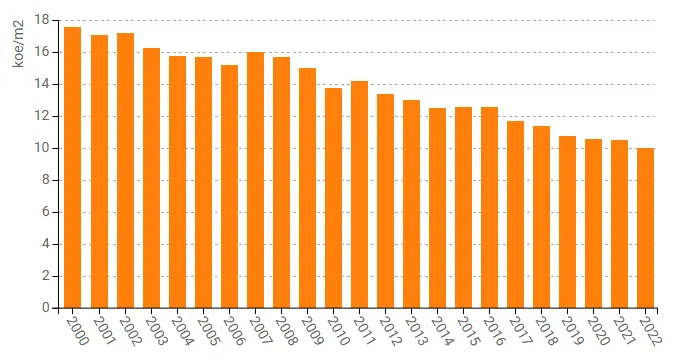
Figure 3: Energy consumption of household space heating per m2 (with climatic corrections)
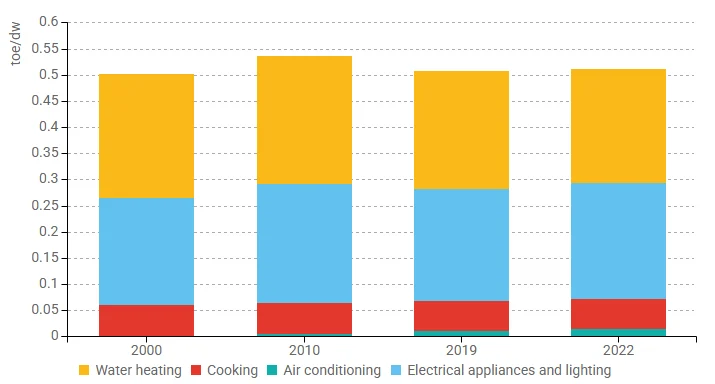
Figure 4: Energy consumption per dwelling by end-use (except space heating)
The energy consumption of households in 2022 was 16 % lower than in 2000 in without climatic corrections . Over the period, increase in the number and size of dwellings and in the number of appliances contributed to raise of energy consumption by 0.31 Mtoe. At the same time, energy efficiency improvements enabled energy savings to overpass the increasing effects (-0.63 Mtoe). Improved energy efficiency is due to improved technical performance of buildings and appliances and also behavioural changes. Climate in 2022 was very similar to 2000, as the climate effect is only 0.03 Mtoe. Also the effect of increase in number of appliances per dwelling is very small (0,02 Mte). Other factors increased energy consumption by 0.08 Mtoe: they mainly correspond to the increased consumption of ambient heat from heat pumps that raised consumption by 0.06 Mtoe and also to some behavioural changes.
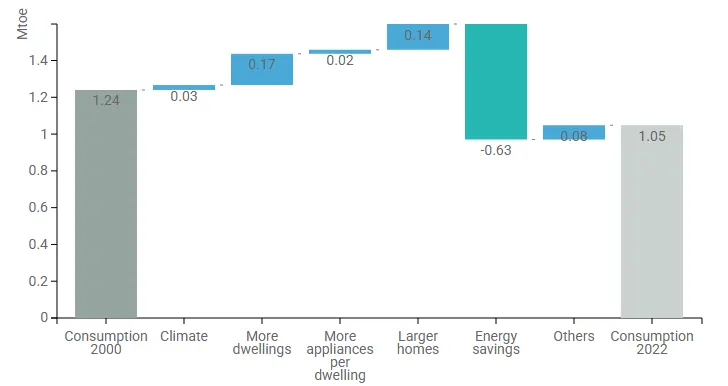
Figure 5: Main drivers of the energy consumption variation in households
In the service sector, the consumption per employee was quite volatile before 2008. After 2008, it has been rather constant until 2018 with a downward trend since then. However, we have to be prudent with the conclusions about energy consumption trends in this sector since the data on energy consumption is calculated as a residual. For electricity effect of COVID can clearly be seen. From 2022 onward data on energy consumption in the service sector is collected through survey, so quality of the data is much better.
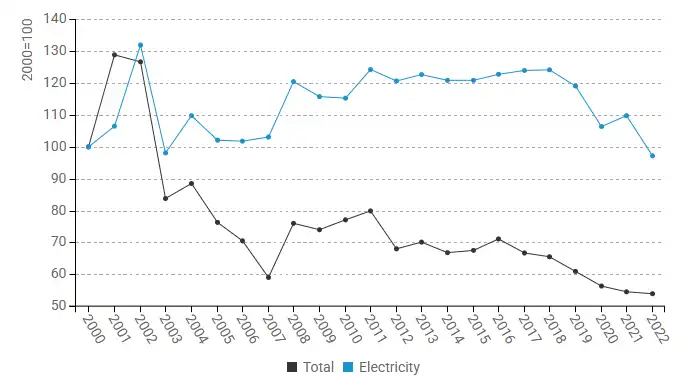
Figure 6: Energy and electricity consumption per employee in services (with climatic corrections)
| Measures | Description | Expected savings, impact evaluation |
| Financial Incentives for Energy Efficiency and the Use of RES in Residential Buildings | The measure consists of financial incentives and other activities (regulation, organization,promotion..), to increase energy efficiency and the use of renewable resources in residential buildings | High |
| Rules on efficient use of energy in buildings 2022 | Rules defines the technical requirements, which have to be implemented for energy efficiency in buildings in the area of thermal insulation, heating, cooling, ventilation or their combination, preparation of hot water and lighting in buildings, providing own RES for operation systems in the building | High |
| Scheme of energy efficiency for low-income households | The first scheme was prepared in 2009 for a subsidy to low-income households for the energy rehabilitation of older multi-apartment buildings in which a larger number of lower-income households reside. The financial subsidy is intended to enable the implementation of low investment measures to reduce energy costs and increase living comfort. | Medium |
| The establishment of the guarantee scheme | Establishing a state guarantee scheme that would enable apartment owners in multi-apartment buildings who do not have sufficient funds to implement energy efficiency measures, to take out a loan at a commercial bank that would be secured with a state guarantee. | Medium |
References: ODYSSEE-MURE, “Country profiles: EU Energy Efficiency & Trends policies.