

Overview
In 2023, the final energy consumption in the Republic of Serbia amounted to 9.4 Mtoe, which is 7% more than in 2010. The largest share in the final energy consumption in 2023 was achieved by the household sector (37%). The transport sector with its share of 28% is on the second place, while industry positioned itself in third place with 24%. These are followed by services (10%) and agriculture (2%). Compared to 2010, there was an increase in final consumption in all sectors, except in industry sector. The agricultural sector recorded the highest increase, which(23%). The share of the transport sector increased by 2.4 points compared to 2010, followed by the residential sector (1.8 points). The shares in the services and agricultural sectors are almost identical, while the share of industry sector decreased by 3.8 points.
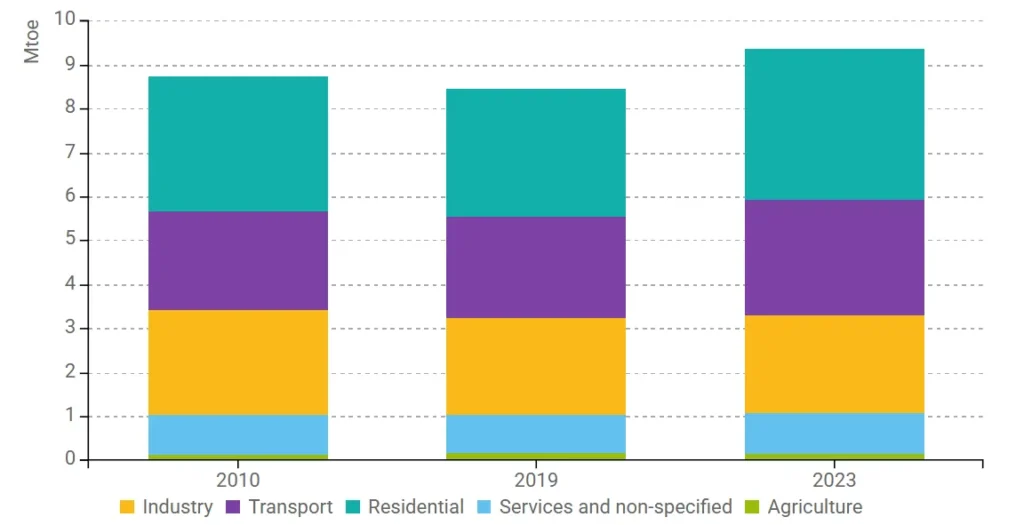
Figure 1: Final energy consumption by sector (with climatic corrections)
Primary intensity in 2023 is estimated to have decreased by 23% compared to 2010 (from 0.417 koe/EUR2015 to 0.323 koe/EUR2015). Final intensity has been decreasing over time at an annual rate of about 1.5%, ie -28% during the observed period (from 0.239 koe/EUR2015 to 0.191 koe/EUR2015).
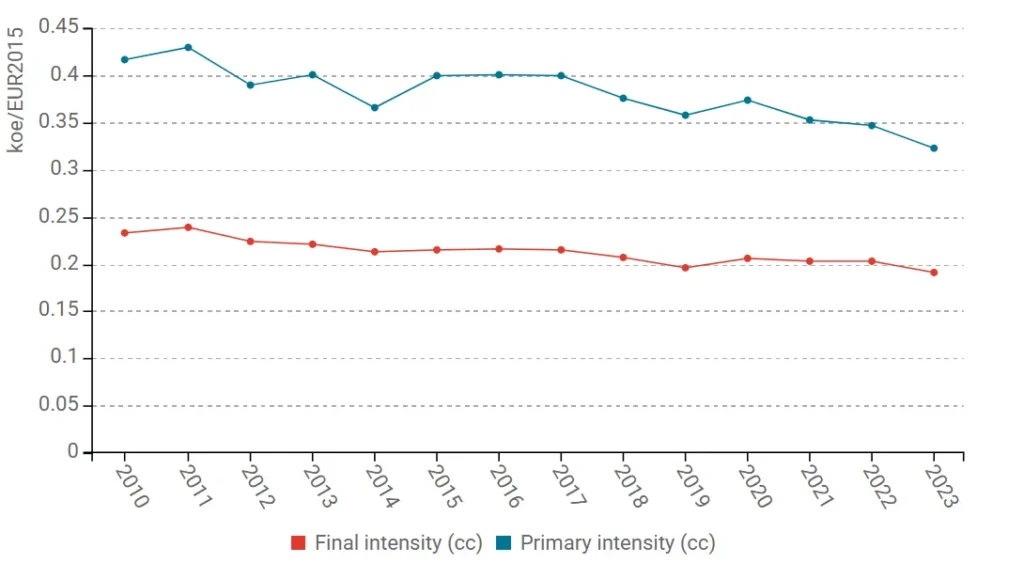
Figure 2: Primary and final intensities (with climatic corrections)
The final intensity in industry decreased considerably in the observed period, so the value of this indicator in 2023 was 35% lower than in 2010. When it comes to the service sector, with minor changes up and down, there was also a significant decrease in the final intensity, by 25%. Unlike the previous two sectors, the agricultural sector recorded an increase, such that the final intensity in 2023 was 26% higher than in 2010, with quite intense jumps in certain years (2012 and 2017).
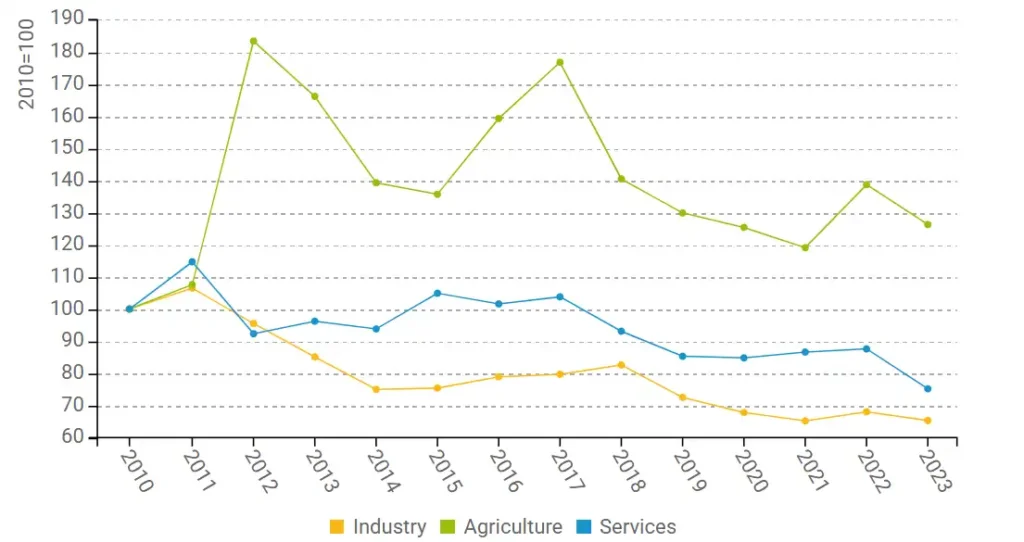
Figure 3: Final intensity by sector
The total energy supply in 2023 was almost identical to 2010 (15.7 and 15.6), i.e. there were no significant factors that would lead to any changes.
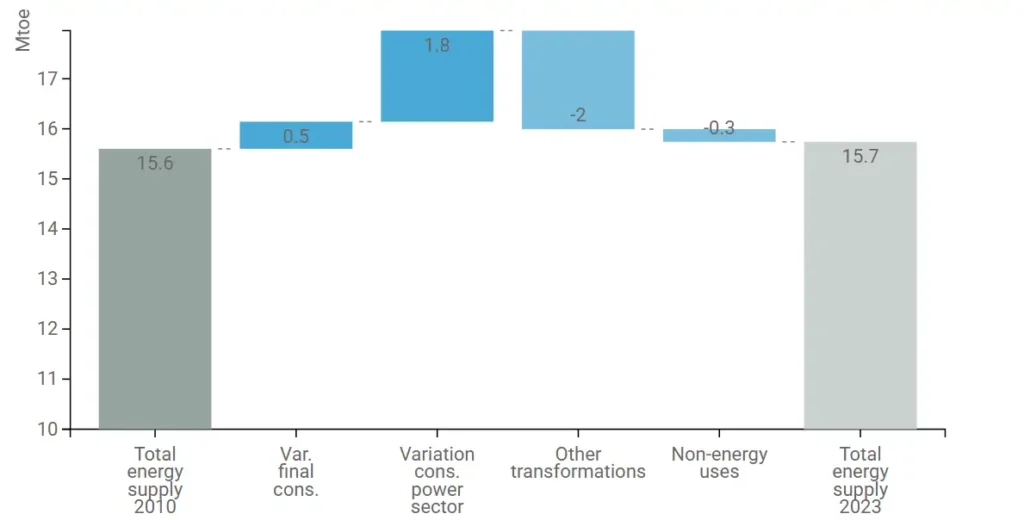
Figure 4: Main drivers of the total energy supply variation
Various awareness-raising activities will be organized with the aim to enhance the existing level of knowledge of all end-users. Priority should be given also to the substitution of inefficient appliances and technologies with new energy efficient ones, along with the effective application of energy labelling and eco-design directives.
The implementation of energy audits and the development of energy management systems in all end-use sectors including non-SMEs and households will be fostered. The smooth and efficient application of green public procurement procedures will be ensured, while the energy efficiency in street lighting by installing energy efficient luminaries will continue to be improved through specialized financial support schemes from public funds, in addition to the energy performance contracts.
The promotion of energy efficiency in the water sector will be assisted, focusing on the examination of the energy-water nexus, the implementation of water management techniques, the installation of water-efficient end-use equipment and the conduction of other energy conservation measures in compliance with the principle “Energy efficiency first”.
The technical and administrative capacity of the involved policy makers will be reinforced in order to facilitate the effective design, implementation, monitoring and evaluation of the energy efficiency measures through specialized trainings, sophisticated tools and materials.
Table 1: Sample of cross-cutting measures
| Measures | Description | Expected savings, impact evaluation |
| Mandatory conduction of energy audits and development of energy management systems | The measure will foresee the continuation of the mandatory development of energy management systems (EMS) and the carrying out of energy audits to the obligated parties for Energy Management System (e.g. big energy consumers from industrial and commercial sector, as well as public sector). The potential expansion of the measure to additional designated parties will be scrutinized, including the application of Directive (EU) 2012/27 requirements in regards to the energy audits implementation. The aim of the measure is the identification of the most cost-effective energy efficiency interventions, while their financing will be aligned with the planned support scheme. In the following period, obligated EMS parties will be obliged to appoint the required number of energy managers and plan/implement measures to reduce energy consumption in accordance with the requirements set by the Government, as well as to report to the Ministry on the implemented measures. If necessary, in the coming period the regulatory framework for the implementation of the Energy Management System will be improved. In order to monitor the implementation of measures, the Ministry of Mining and Energy will ensure the operation of the necessary information systems. Finally, the appointment of energy managers will be mandatory for the public and municipal buildings, which will, among other duties, monitor final energy consumption, the identification of the most cost effective energy efficiency interventions, the surveillance of the implemented works for the energy renovation of the buildings and the development of energy management systems. | Contribution to fulfilling the expected final energy consumption levels |
| Strengthening the technical and administrative capacity of the involved policy makers | The measure will continually reinforce the technical and administrative capacity of the involved policy makers in order to facilitate the effective design, implementation, monitoring and evaluation of the energy efficiency measures. Specialized trainings will be organized and sophisticated tools and materials will be prepared, ensuring that the existing level of knowledge and the required skills have reached the satisfactory level. Training may include requirements for the preparation of project/technical documentation in order to increase the quality and the utilization of the projects for the deep renovation of the buildings, but also preparation of technical documentation and design brief for their implementation. Finally, tools will be further improved and, when needed, developed for monitoring the achievement of the established targets and the performance of the implemented policies and measures including the compliance with the “Energy Efficiency First” principle. | Contribution to fulfilling the expected final energy consumption levels |
| Updating, simplifying and optimizing the authorization, certification, permit-granting and licensing procedures – Establishment of One-stop shop | The measure will examine the update, simplification and optimization of the existing authorization, certification, permit-granting and licensing procedures so as to become more operational and to lead to the implementation of the required renewable energy stations for achieving the national targets, the active public participation, the effective protection of public interest, the smooth integration into the networks and the increased social acceptability. Moreover, the different entrepreneurial, environmental and social parameters will be combined and integrated in a fair and transparent framework. The main objective of the measure is to accelerate the completion and commercialization of the planned investments and to create reliable conditions for the potential investors in order to mobilize new investments. Finally, the potential establishment of a one-stop shop will be examined so as to provide the required information and technical guidance to the interested investors facilitating the realization of the planned investments (in accordance with Article 16 or RED II). | Contribution to the expected RES penetration for electricity production |
Buildings
When it comes to final energy consumption in buildings, the household and service sectors show different trends. Households recorded an increase in energy consumption from 3,056 Mtoe to 3,446 Mtoe, which corresponds to an increase of 13%. On the other hand, final energy consumption in the service sector remained almost unchanged, i.e. in 2023 an increase of only 2% was recorded compared to 2010. Consequently, the total increase of final energy consumption in buildings amounts to 9%.
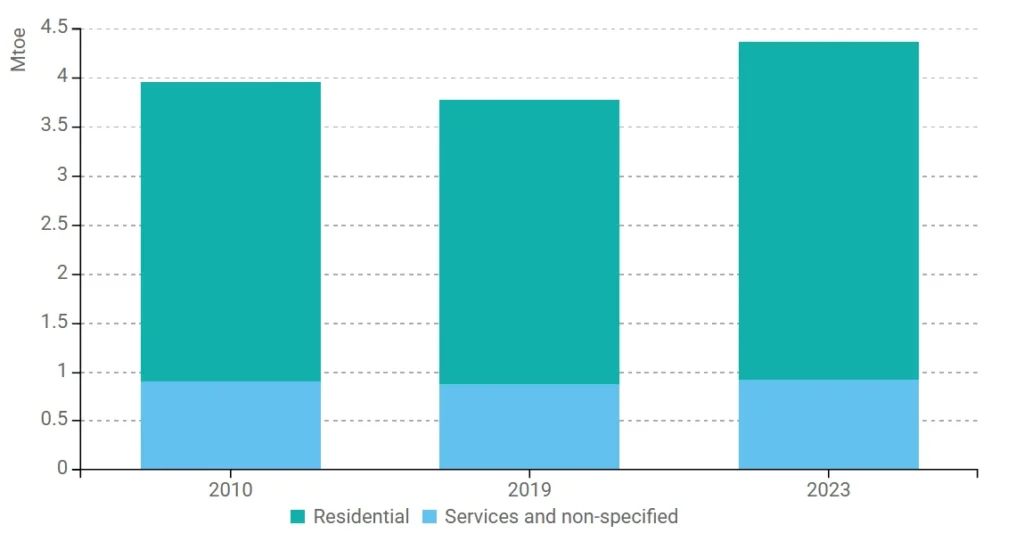
Figure 5: Final energy consumption in buildings (with climatic corrections)
Household electricity consumption is in almost constant decline, at a rate of 1.5% per year, corresponding to a total decrease of 18% for the period 2010-2023. When looking at the total energy consumed in households, it shows a smaller increase, from 1,255 kWh/dw in 2010 to 1,303 kWh/dw in 2023, corresponding to an increase of 4%, but with a decrease of 7.3% recorded in the period 2020-2023.
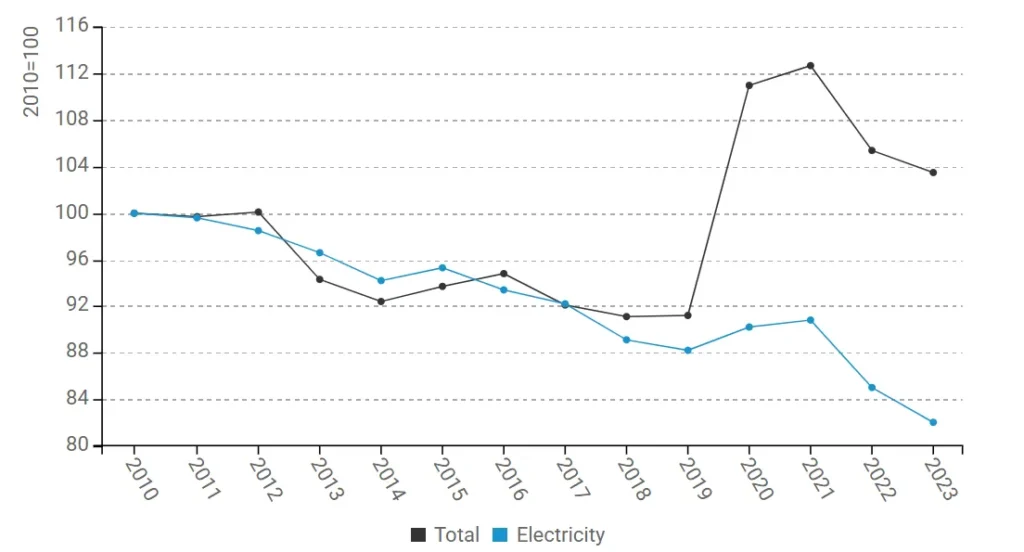
Figure 6: Energy and electricity consumption in households per dwelling (with climatic corrections)
Household heating energy consumption increased from 0.274 toe/cap to 0.348 toe/cap, an increase of as much as 27%. However, two periods with relatively constant consumption are observed, one in 2010-2019 and the other in 2020-2023.
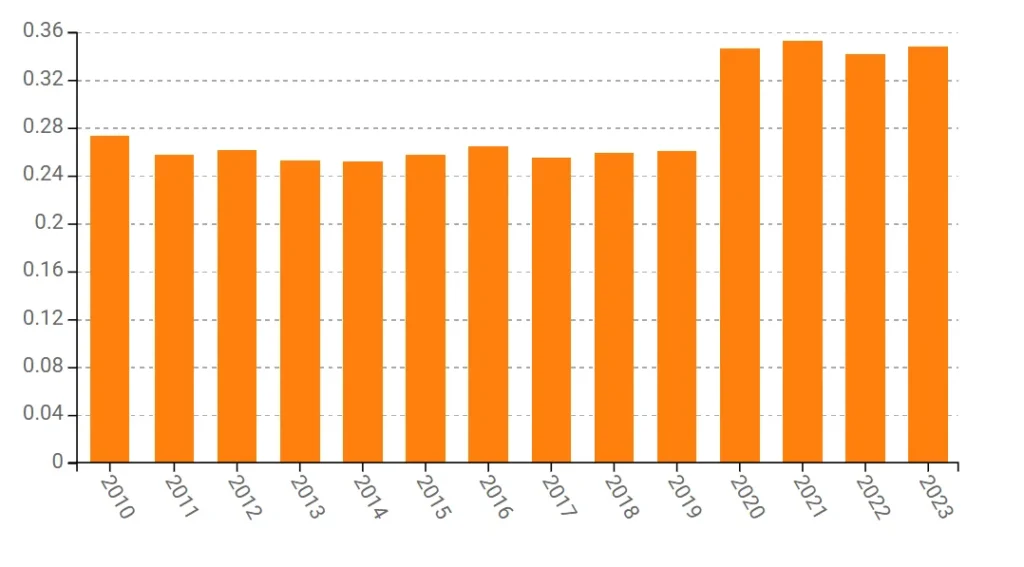
Figure 7: Energy consumption per capita for space heating in households (with climatic corrections)
Except for cooking, which increased from 0.031 toe/cap in 2010 to 0.037 toe/cap in 2023, or 20%, all other energy uses in households remained almost constant (with a minimal decrease of 1% or 2%).
When it comes to shares, the changes are also minor, so the largest share is still the use of electrical appliances and lighting at 42%, followed by water heating, whose share is 35%. The share of cooking is 22%, and of cooling 1%.
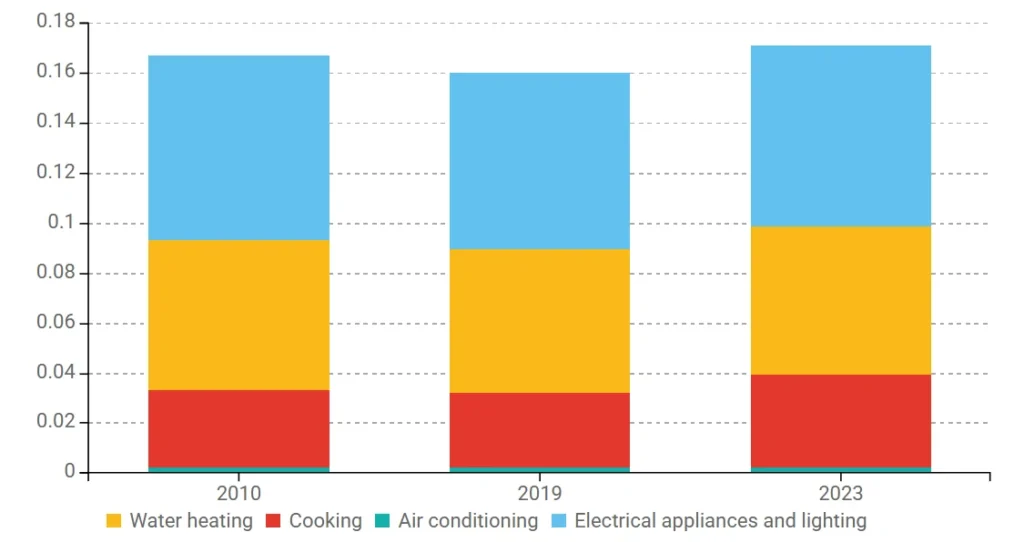
Figure 8: Energy consumption per capita by end-use in households (except space heating)
A well-balanced mixture of policy measures, financing, fiscal and regulatory, will be implemented in order to support the energy renovation of the building stock and to attain the specified renovation rate. All the planned measures will be systematized in the Long-Term Strategy for Encouraging Investment in the Renovation of the National Buildings Fund of the Republic of Serbia until 2050, and are intended for residential and non-residential buildings, both public and private.
Financial support will be provided for fostering the improvement of energy performance and energy modernization of residential and non-residential buildings. Further, the consistency and compliance of the legislative framework with the provisions of the Directive 2018/844/EU, respectively EPBD 2010/31/EU will be ensured, whereby the minimum requirements will be incorporated in the Energy Performance of Building Directive in order to increase the number of near-zero energy buildings. The inspections of the heating and air conditioning systems will be conducted according to the respective provisions.
Finally, the role of the Energy Performance Building Certificates will be enhanced aiming at their transformation into renovation passports so as to be fully aligned with the provisions of the revised Directive 2018/844/EU and to facilitate the implementation of the most cost-effective interventions.
Table 2: Sample of policies and measures implemented in the building sector
| Measures | Description | Expected savings, impact evaluation |
| Installation of solar thermal systems in new buildings and in buildings undergoing extensive energy renovation (Households) | The measure will facilitate the installation of solar thermal systems in new buildings and those undergoing major renovation, as defined in Directive 2010/31/EU, facilitating simultaneously the further deployment of renewable energy. The planned measure will also be used to combat energy poverty. | 1.8 GW capacity of solar thermal systems (primary energy savings 41 ktoe) |
| Energy renovation of residential, multi-family buildings connected to a district heating system | The project aims to improve energy efficiency in multi-family residential buildings connected to district heating systems and transition to billing based on heat consumption. The EBRD plans to provide grants for further development of the Project, preparation of energy efficiency reports and relevant studies, financing of supervision over the execution of works, and assistance in implementation. | A reduction in primary energy consumption of 81 GWh per year is expected, as well as a reduction in CO2 emissions of 20,000 t per year. |
| Energy efficiency in central government buildings | The Ministry of Mining and Energy has launched the project “Energy Efficiency in Central Government Buildings” with the aim of implementing the energy renovation of central government buildings. The Project includes improving the energy efficiency of 26 out of a total of 56 central government buildings. In these central government buildings, energy renovation will be carried out through the reconstruction of the thermal envelope (replacement of joinery and installation of insulation), reconstruction of the heating system, reconstruction of the cooling and ventilation system in buildings where it exists, as well as the installation of energy-efficient interior lighting, which will achieve energy savings in these buildings of about 30%. | At the level of the entire project, annual energy savings of 22 GWh are expected, with an annual reduction in CO2 emissions of 7,350 tons. |
References: ODYSSEE-MURE, “Country profiles: EU Energy Efficiency & Trends policies.