

Overview
In 2022, the final energy consumption in Portugal was 16.3 Mtoe, 5% lower than in 2000. The transport sector remained the largest energy consumer, accounting for 35.7% of the final energy consumption, followed by the industry sector with 27.5%, the residential sector with 18.8%, and the services sector with 14.9%. Between 2000 and 2022, energy consumption decreased by 28% in the industry sector, 33% in agriculture, and 3% in transport. In contrast, the residential and services sectors registered increases of 10% and 75%, respectively, in the same period of analysis.
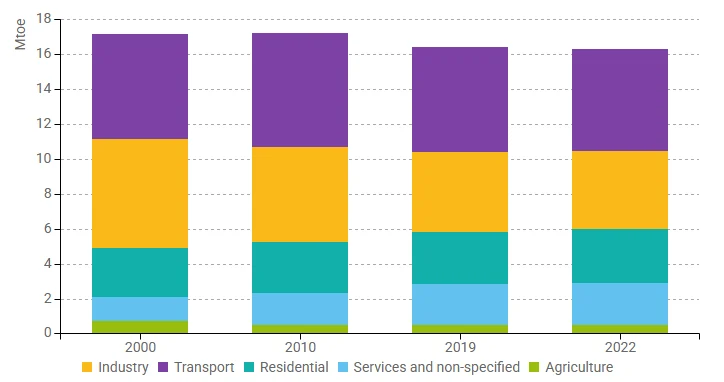
Figure 1: Final energy consumption by sector (with climatic corrections)
The technical energy efficiency index (ODEX) for final consumers in Portugal improved by 30% between 2000 and 2022, with an average annual improvement of 1.6%. The household sector achieved the highest energy efficiency gains, with a 40% improvement over the period, corresponding to an annual rate of 2.3%. The industry and transport sectors also recorded significant improvements of 33% and 28% respectively, translating into annual gains of 1.8% and 1.5%. In contrast, the services sector only registered a 2% improvement between 2000 and 2022, representing an almost negligible annual change of 0.1%.
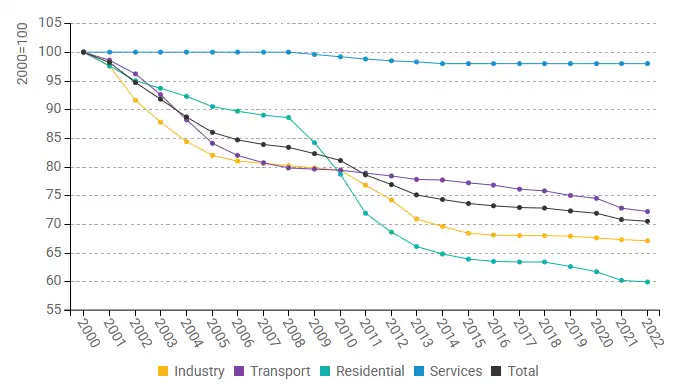
Figure 2: Technical Energy Efficiency Index
Portugal’s energy transition is driven by three key cross-cutting measures: the Recovery and Resilience Plan (RRP), ECO.AP 2030, and the Energy Saving Plan (ESP) 2022-2023.
The RRP (2021-2026), established by Decree-Law n.º 29-B/2021, directs European funds to promote sustainable growth through structural reforms and investments, with expected savings of 3.18 TJ. It focuses on improving energy efficiency, promoting renewable energy, and reducing GHG emissions.
The ECO.AP 2030 program targets the Public Administration, aiming to become a leader in resource efficiency, targeting a 40% reduction in primary energy consumption, a 10% share of self-energy production from renewable energy and, a 20% reduction in water and material usage by 2030. It also aims to achieve an energy renewal rate of 5% in public buildings, contributing 0.64 TJ in savings.
The ESP 2022-2023 responds to Europe’s gas crisis caused by Russia’s invasion of Ukraine. Approved by the Resolution of the Council of Ministers (RCM) 82/2022, it aims to reduce natural gas consumption by 15% between August 2022 and March 2023, delivering savings of 1.91 TJ. Together, these measures strengthen Portugal’s efforts to improve energy security, promote sustainability, and achieve its national and EU decarbonization targets.
| Measures | Description | Expected savings, impact evaluation |
| The Portuguese Recovery and Resilience Plan (RRP) | Decree Law (DL) n.º 29-B/2021, 4th of May, establishes the governance model to manage the European funds allocated to Portugal through the Recovery and Resilience Plan (RRP), under the Recovery and Resilience Mechanism of the European Union for the period 2021-2026. | 3.18 TJ |
| Resource Efficiency Program in Public Administration (ECO.AP 2030) | ECO.AP 2030, aims at placing the Public Administration at the forefront of efficiency, as the model in the adoption of measures to improve efficiency regarding energy, water and other resources, establishing a set of objectives and goals that contribute to the decarbonization and energy transition of the public administration activities. | 0.64 TJ |
| Energy Saving Plan (ESP) 2022-2023 | The European Commission launched the REPowerEU initiative and the “Save Gas for a Safe Winter” Regulation to deal with the energy crisis prompt by the Russian invasion on Ukraine. Reliance on fossil fuels needs to be reduced, which requires an accelerated energy transition and a reduction in energy consumption, especially natural gas. The Commission proposed the creation of National Energy Saving Plans and the Portuguese Energy Saving Plan (ESP) 2022-2023 was approved by the Resolution of the Council of Ministers (RCM) 82/2022 of 27th September, in response to the European Commission’s challenge to reduce gas consumption by 15% between August 2022 and March 2023. | 1.91 TJ |
Buildings
In 2022, Portugal’s residential sector accounted for 18.8% of the total energy consumption (3.1 Mtoe). Space heating consumption per m² (adjusted for climate) was 3.1 koe/m², representing a 24.6% increase since 2000, (1%/year on average), with however significant fluctuations: a 2.4% drop from 2020 to 2021, followed by a 12.6% increase in 2022. Cooking remained the highest energy use per dwelling (0.22 toe/dw), decreasing by 34% since 2000 (-1.9%/year) and representing 45% of household consumption in 2022. Domestic hot water use dropped by 28% (1.5%/year) to 0.12 toe/dw, while electrical appliances and lighting increased by 19% (0.8%/year), reaching 0.14 toe/dw and rising to 30% of household energy use. Space cooling remained marginal at 0.01 toe/dw but registered a 54% increase since 2000, driven by demand between 2019 and 2021. Overall, energy consumption trends reflect efficiency improvements and changing household energy needs.
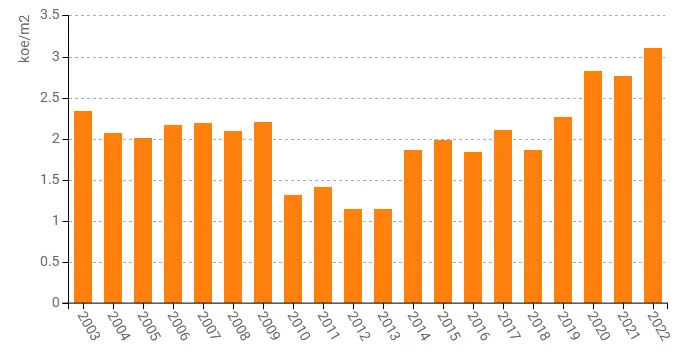
Figure 3: Energy consumption of household space heating per m2 (with climatic corrections)
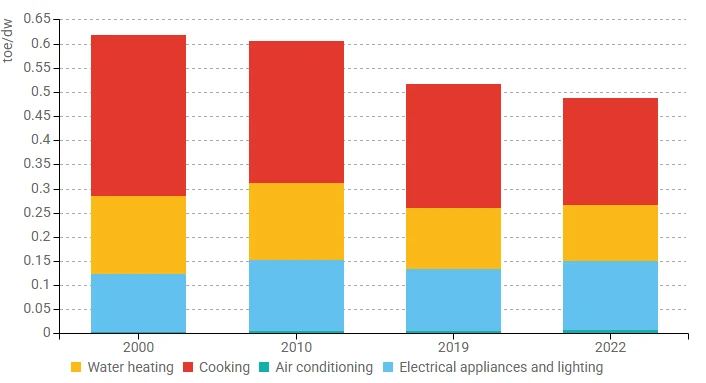
Figure 4: Energy consumption per dwelling by end-use (except space heating)
In 2022, the final energy consumption in the residential sector increased by 0.15 Mtoe (5%) compared to 2000, reaching 2.96 Mtoe. This increase is primarily driven by the rise in the number of dwellings (+0.64 Mtoe), bigger homes (+0.09 Mtoe), and other factors (+1.2 Mtoe); these other factors combine the increased use of ambient heat from heat pumps (+0.3 Mtoe) and behavioural effects linked to better heating comfort (0.9 Mtoe). Energy savings (-1.39 Mtoe) and the impact of climatic conditions (-0.19 Mtoe) contributed to a reduction in energy consumption but were insufficient to offset the overall rise in the energy demand within the sector.
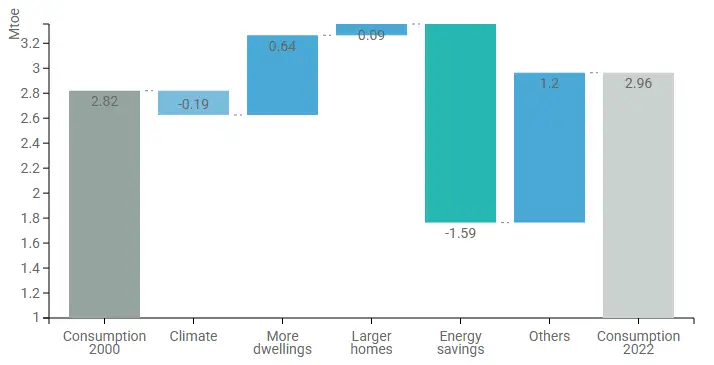
Figure 5: Main drivers of the energy consumption variation in households
Based on the 2022 data, the final energy consumption per employee in the services sector increased by 34% compared to 2000, reaching 0.71 toe/emp. This represents an average annual growth of 1.3%. The rise reflects the sector’s expansion and higher energy use per employee over the period analysed. Between 2021 and 2022, energy consumption per employee increased by 8.0%, following two consecutive years of decline. Regarding electricity consumption per employee in the services sector, there was a 13% increase compared to 2000, reaching 4,819 kWh/emp in 2022, with an average annual growth rate of 0.5%. Between 2021 and 2022, the electricity consumption per employee registered a significant rise of 9.1%, following reductions of -6.1% and -5.2% in the two preceding years.
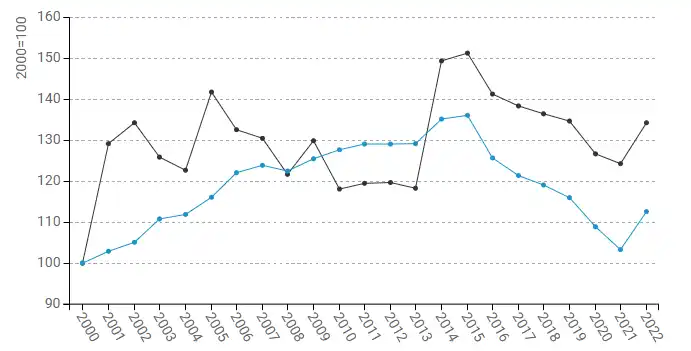
Figure 6: Energy and electricity consumption per employee in services (with climatic corrections)
The Financial Instrument for Urban Rehabilitation and Revitalization (IFRRU 2020) was established by the Council of Ministers Resolution (RCM) no. 84-O/2016 on the 30th of December, with the goal of consolidating various funding sources to support urban rehabilitation across Portugal. IFRRU 2020 serves as a financial instrument to facilitate investments in urban renewal throughout the country. To stimulate investment, IFRRU 2020 combines European funds from PORTUGAL 2020, funds from entities like the European Investment Bank and the Development Bank of the Council of Europe, along with commercial banking funds. The process for funding is streamlined, requiring a single application without restrictions on the entity seeking financing or the future use of the renovated building. Applications can be submitted to selected banks through their commercial network at any time, without specific application periods or limits on the number of applications per candidate. IFRRU 2020 has a financing capacity of 1.4 billion euros, generating an estimated investment of around 2 billion euros. Its objective is to enhance the sustainability of cities, enhance inhabitants’ quality of life, and create new opportunities for economic and social development in urban centers.
| Measures | Description | Expected savings, impact evaluation |
| Financial Instrument for Urban Rehabilitation and Revitalization (IFRRU 2020) | This program combines different financial sources and creates one main instrument that provides funds for renovation measures and supports easy-to-access conditions. There are no restrictions related to the nature of the entity requesting the financing or the future use of the renewed building. The measure also aims at improving the cities’ sustainability, the social development in urban centres. | 0.13 TJ |
References: ODYSSEE-MURE, “Country profiles: EU Energy Efficiency & Trends policies.