
Overview
Final energy consumption in Poland was increasing by 1.3%/year from 2000 reaching 71.7 Mtoe in 2022 (at normal climate). The biggest consumer was transport sector, which share amounted to 33% in 2022, followed by households with 30% share. Energy use of third biggest consumer – industry – decreased by around 0.4%/year during given period and accounted for 21% of final energy consumption in 2022. Service sector, due to a rapid growth of consumption (2.2%/year) increased its share to 12% of total final consumption. Consumption in agriculture decreased by 1.5%/year and the share of this sector amounted to 4.6% in 2022.
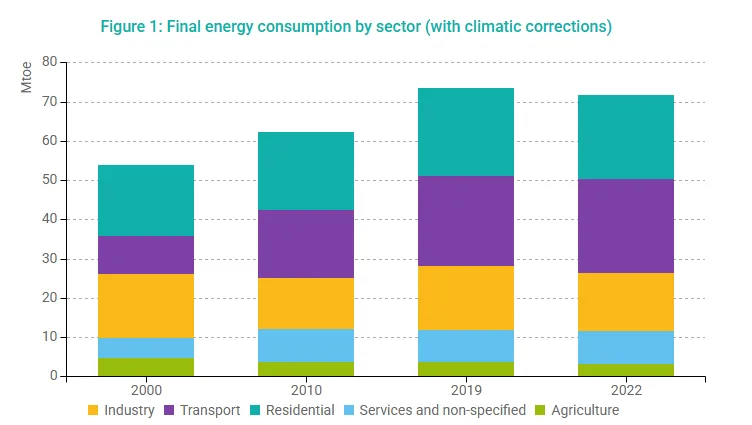
Figure 1: Final energy consumption by sector (with climatic corrections)
In 2022, energy efficiency for final consumers had improved by 30% since 2000, averaging a yearly improvement of 1.6%. The most notable progress was seen in the industrial sector, which achieved a 58% increase in efficiency, equating to an annual improvement of 3.8%. Household energy efficiency improved by 21% compared to 2000, with a yearly improvement rate of 1.1%. In the transport sector, energy efficiency rose by 16% over the same period, with an annual improvement of 0.8%. However, the services sector saw only a modest 3% increase in energy efficiency since 2000, translating to an annual improvement of just 0.1%.
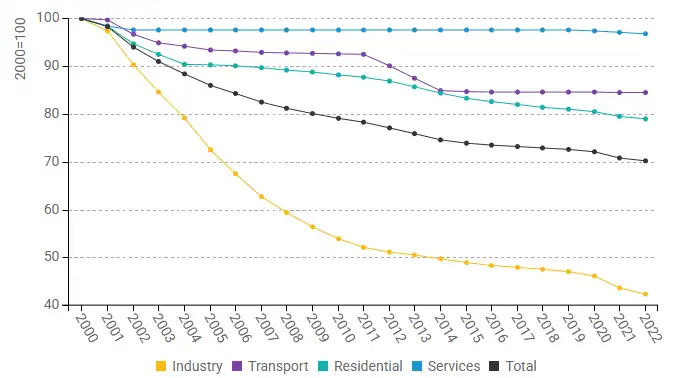
Figure 2: Technical Energy Efficiency Index
| Measures | Description | Expected savings, impact evaluation |
| System of white certificates – Energy efficiency Act | The Energy Efficiency Act includes provisions to introduce a white certificate scheme to stimulate energy efficiency measures across the economy. The white certificate system operates in three areas, called categories of energy efficiency measures: 1) Increased energy savings by end users. 2) Increasing energy savings by energy producers from equipment used for their production needs. 3) Reducing losses of electricity, heat or natural gas in transmission or distribution. | 29.29 PJ |
| European funds – operational programmes in the financial perspective 2021-2027 | Operational programmes under the 2021-2027 Financial Perspectives aim to implement the assumptions and objectives of the National Energy and Climate Plan for 2021-2030 in the following areas: energy security; internal energy market; energy efficiency; decarbonisation; research, innovation and competitiveness. | 26.03 PJ |
| Energy for the countryside | The programme aims to increase the use of renewable energy sources in rural and urban communities. The main beneficiaries of the programme are energy cooperatives (existing and new) and farmers. | 14.58 PJ |
Buildings
Household heating energy consumption per square meter, adjusted for climate, decreased by an average of 0.9% per year, reaching 13.08 koe/m² in 2022—a reduction of 18% compared to 2000.
In 2022, the energy consumption per dwelling for water heating was 0.27 toe, reflecting a 2% decrease compared to 2000 and an annual reduction rate of 0.1%. Energy consumption for cooking was 0.14 toe, marking a 10% decrease since 2000 and a 0.5% annual reduction. However, energy use for lighting and electrical appliances rose to 0.15 toe, an increase of 22% compared to 2000, with an annual growth rate of 0.9%.
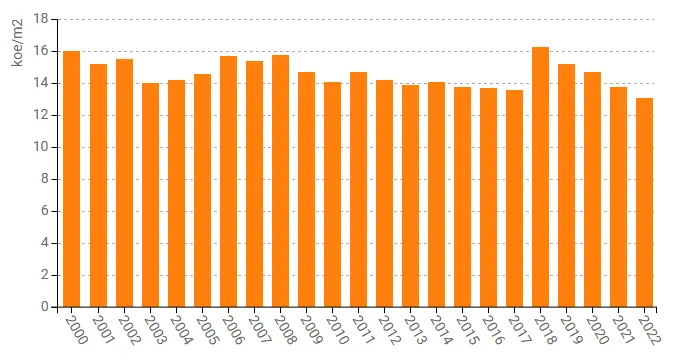
Figure 3: Energy consumption of household space heating per m2 (with climatic corrections)
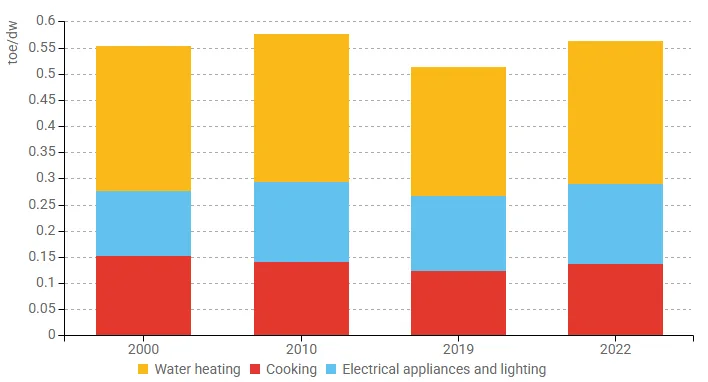
Figure 4: Energy consumption per dwelling by end-use (except space heating)
In 2022, energy consumption in households amounted to 22.2 Mtoe, an increase of 29% compared to 2000. In the period 2000-2022, energy savings reduced household energy consumption by 4.9 Mtoe, whereas climate increased energy consumption in households by 1.7 Mtoe, more dwellings by 4.3 Mtoe, larger homes by 2.6 Mtoe, and other factors by 1.3 Mtoe.
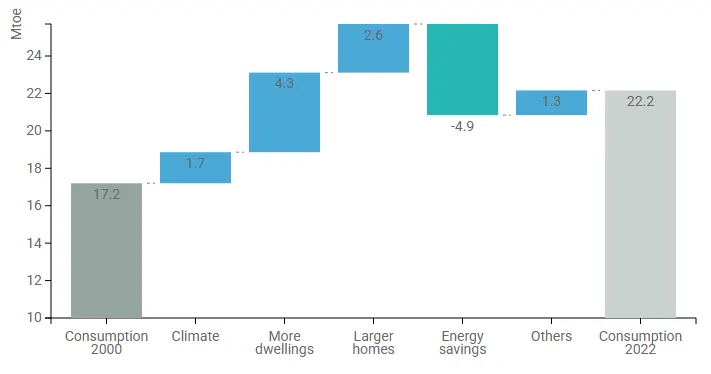
Figure 5: Main drivers of the energy consumption variation in households
In 2022, energy consumption per employee in the service sector increased by 12% compared to 2000, corresponding to an increase of 0.5%/year.
In 2022, electricity consumption per employee increased by 32% compared to 2000, an increase of 1.3%/year.
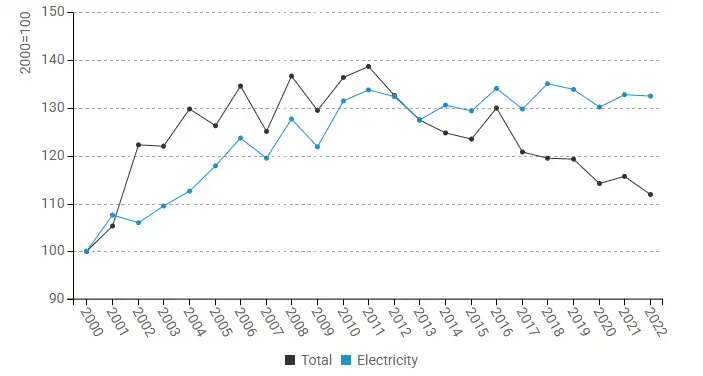
Figure 6: Energy and electricity consumption per employee in services (with climatic corrections)
| Measures | Description | Expected savings, impact evaluation |
| Thermo-modernization tax relief | The scheme is aimed at owners or co-owners of single-family homes. The relief can be used if you incur expenses related to the thermal modernisation of the house. | 24.82 PJ |
| Warm Housing | Improve air quality and reduce dust and greenhouse gas emissions by replacing heat sources and improving energy efficiency in multi-family dwellings. | 18.56 PJ |
| My Heat | The programme aims to support the development of individual heating and prosumer energy development in the field of air, water and ground source heat pumps in new single-family homes. | 8.47 PJ |
References: ODYSSEE-MURE, “Country profiles: EU Energy Efficiency & Trends policies.