
Overview
In 2022 total final energy consumption was 5.8% lower than in 2000 (normal climate). Residential sector is the biggest consumption sector in Denmark and the consumption in 2022 is almost at the same level as in 2000 (4.14 Mtoe compared to 4.23 Mtoe). Transport sector (excl. international air transport) is the second largest sector and its consumption has very slightly decreased (from 4.07 Mtoe in 2000 to 4.02 Mtoe in 2022). The energy consumption in the service sector has increased from 1.87 Mtoe in 2000 to 1.99 Mtoe in 2022. The industry sector has decreased by 17%, from 3.01 Mtoe in 2000 to 2.49 Mtoe in 2022.
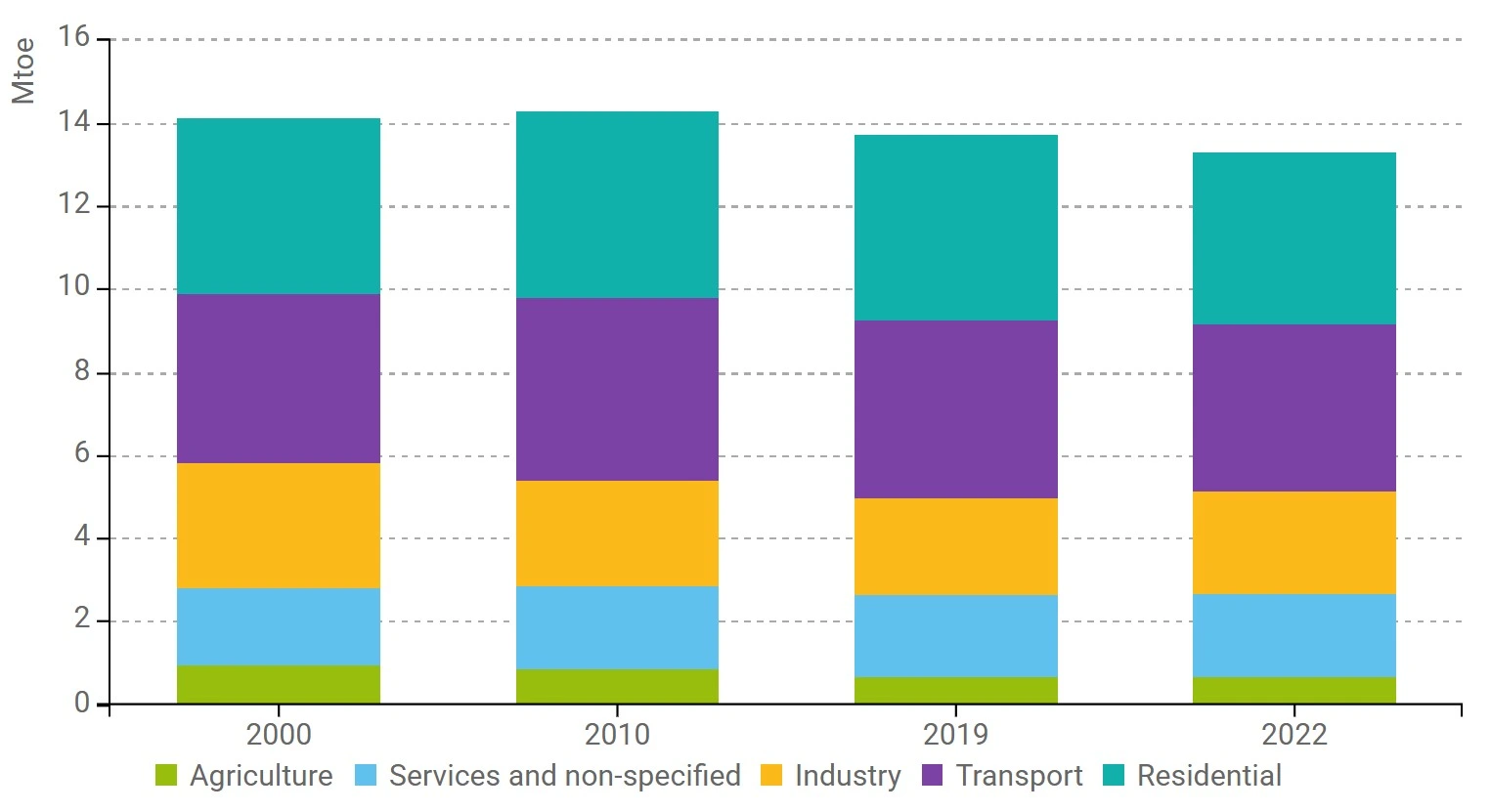
Figure 1: Final energy consumption by sector (with climatic corrections)
Energy efficiency of final consumers, as shown by ODEX, improved by an average of 1.1%/year from 2000 to 2022 (or 22% in total). Most improvement has been registered in industry (1.9%/year or 35% in total) and residential (1.1%/year or 21% in total).
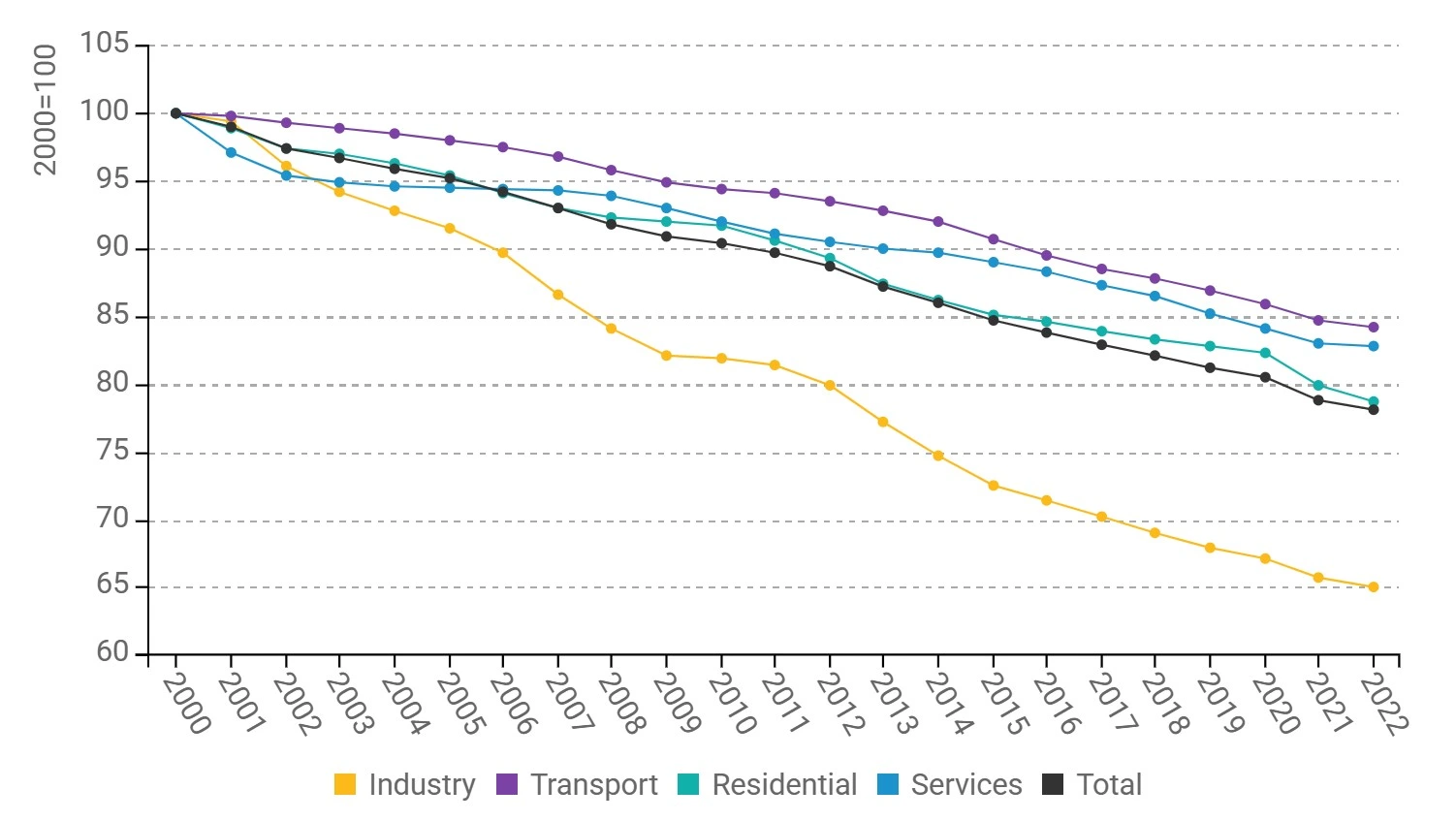
Figure 2: Technical Energy Efficiency Index
The Danish government has a clear ambition: Denmark is to be climate neutral by 2045. A key element in fulfilling this target is energy efficiency along with an increased use of renewable energy.
Buildings
The energy consumption for households’ space heating per m2, including climatic corrections, has decreased by an average of 0.9% per year over 2000-2022 from 8.93 to 7.37 koe/m2, a total decrease of 17%. Energy consumption for households per dwelling, other than space heating, has also decreased, especially for water heating (21% from 2000 to 2022), followed by electrical appliances and lighting (20%).

Figure 3: Energy consumption of household space heating per m2 (with climatic corrections)
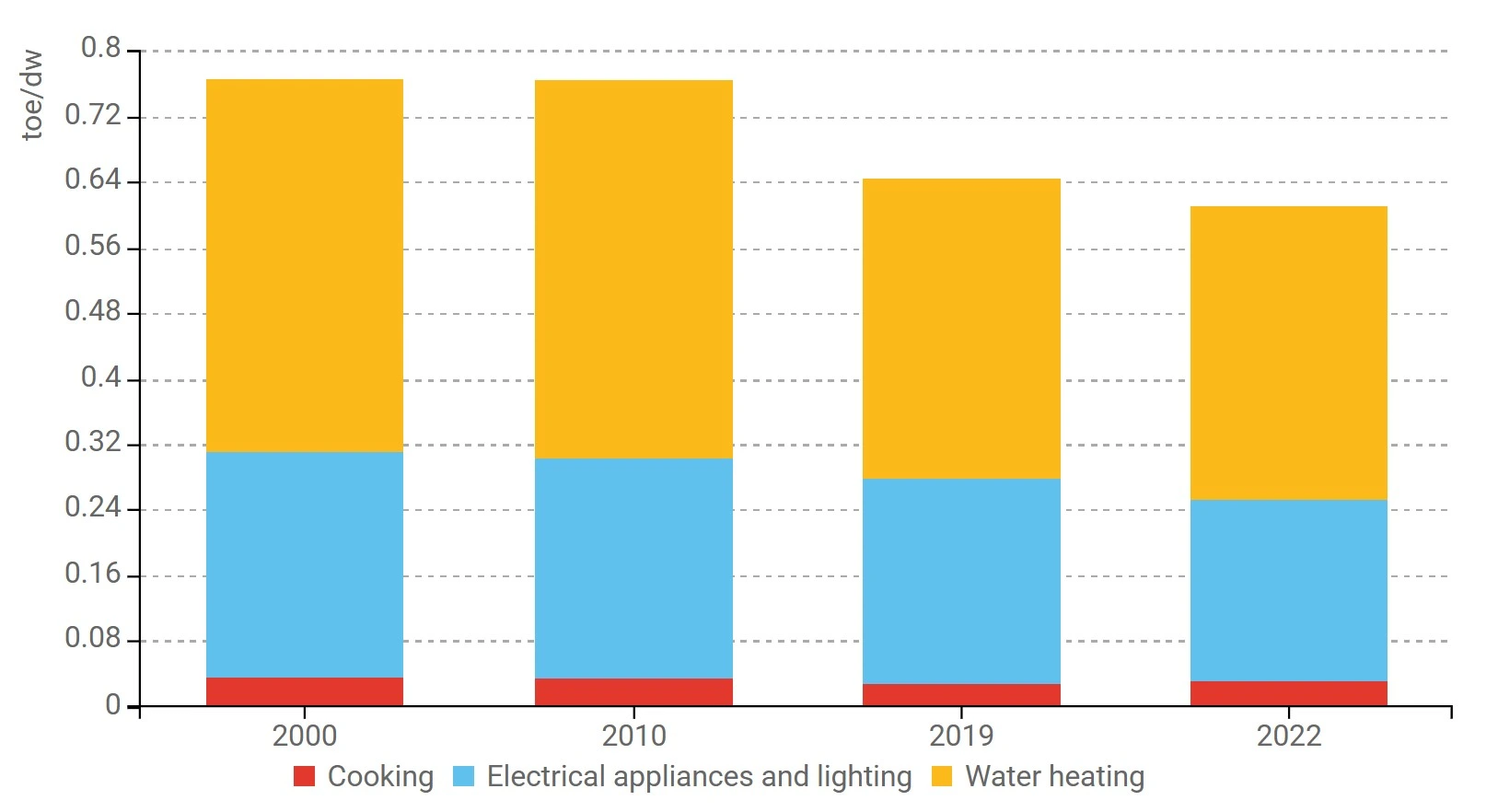
Figure 4: Energy consumption per dwelling by end-use (except space heating)
Energy consumption for households has decreased by 3.6% over the period 2000-2022. Two main drivers contributed to increase the energy consumption: more dwellings and larger homes. On the other hand, energy savings are the largest contributor to the decrease in the households’ energy consumption.

Figure 5: Main drivers of the energy consumption variation in households
Energy consumption and electricity consumption per m2 in services has decreased by 25% and 30% respectively from 2000 to 2022. Both electricity and total energy consumption per m2 was quite stable until 2008, then decreased. In 2022, energy consumption and electricity consumption per m2 in services is 1,3% and 3,7% lower than in 2019.
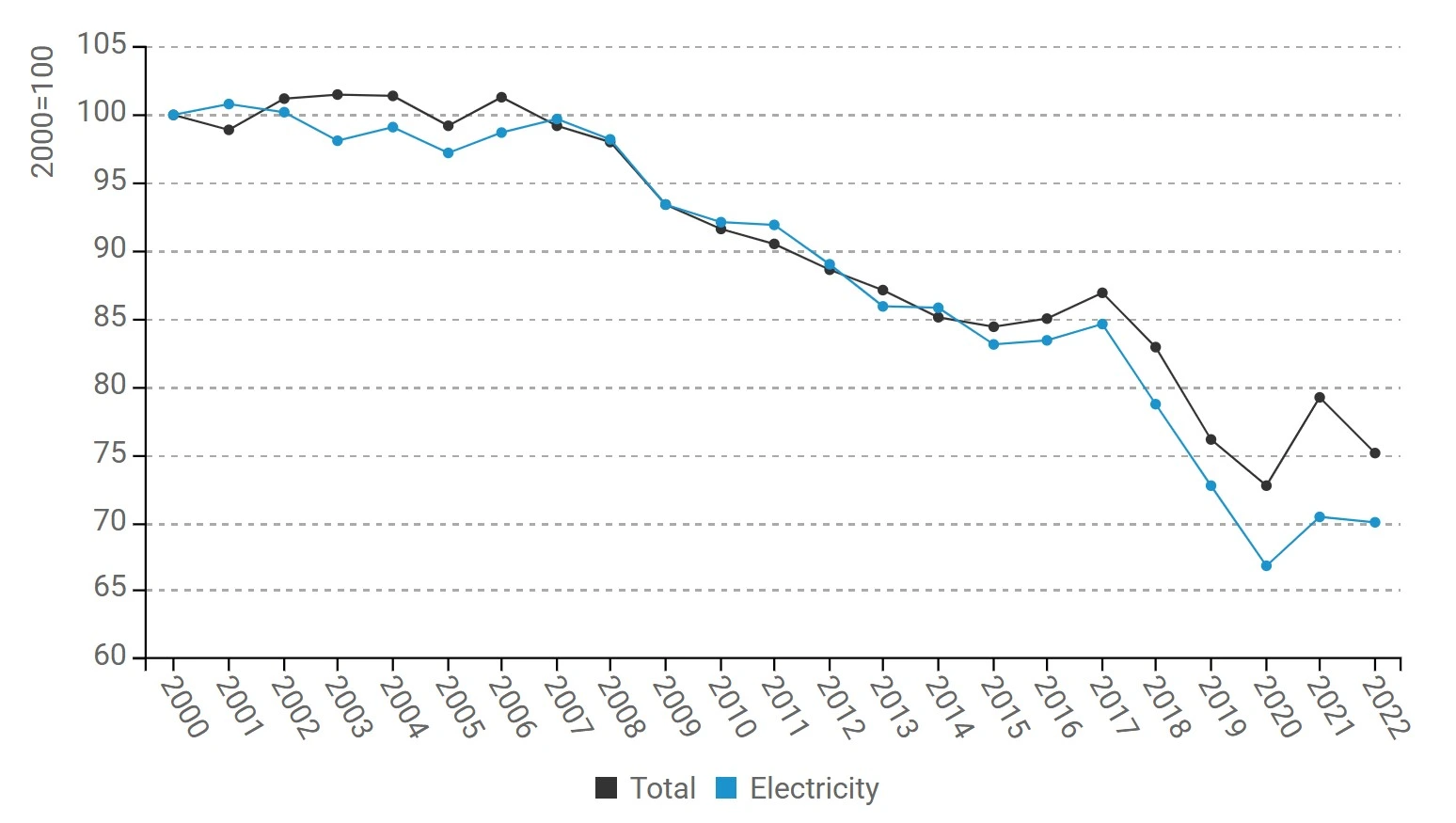
Figure 6: Energy and electricity consumption per m² in services (with climatic corrections)
The policies and measures to promote energy efficiency in buildings are a combination of economic incentives (Making it easier for homeowners to renovate their homes, implementation of scheme to replace oil boilers with heat pumps in areas without access to district heating or access to gas grid), and regulation (as energy requirements for new buildings, Danish certification system of energy performances of buildings, and requirements and labelling of energy-related products). Furthermore, a part of rent in social housing goes into a fund that finances refurbishment in the buildings.
| Measures | Description | Expected savings, impact evaluation |
| Subsidy scheme to replace oil burners with heat pumps in buildings outside the district heating and gas grids | The scheme is implemented as a subsidy scheme with the objective to replace oil boilers with heat pumps in buildings located in areas without access to district heating or the gas grid. | 0.56 TJ |
| Agreement on green refurbishment of social housing | Part of the rent payed by tenants in social housing goes to a fund that finances refurbishment of the buildings. There is allocated 30.000.000.000 DKK during 2021-2026. | 0.56 TJ |
| EU-related: Energy Performance of Buildings EPBD – Building regulations | The energy requirements for new buildings have been strengthened quite considerably the last 25 years. According to the EU’s Buildings Directive, the energy provisions must be reviewed with regular intervals which shall not be longer than five years. The latest revision of the Building Codes was in 2020 where, among other things, the energy requirements for windows and exterior doors were tightened. The building codes have also strong requirements in relation to components in existing buildings. However, there is also requirements for indoor climate, such as daylight and indoor temperatures. | 0.94 TJ |
EU-related: Energy Performance of Buildings EPBD – Building regulations
Objectives
- Transposing EU EPBD rules (original 2002 directive and updates including recast 2010/31/EU and revised 2018/844/EU) into national law to ensure EU compliance
- Enable all new buildings to be Nearly Zero-Energy Buildings (nZEB) by the EU deadlines (public buildings by end‑2018, all buildings by end‑2020)
- Long-term goal: fossil‑fuel free energy supply by 2050 and CO₂ reduction targets (e.g. 40% by 2020 vs 1990 baseline)
- Support the EU’s goals for building renovation and standards through Long-Term Renovation Strategies launched in March 2020 and July 2021
Key Features & Building Regulations
- Renovation Measures
- For major renovations (windows, roofs, HVAC), the code requires replacement components to meet new energy performance minima (e.g. U‑values, airtightness etc.) — ensuring continuous stock upgrade
- Component standards example (BR10 era): roof and wall U‑values ~0.10 W/m²·K, window U-values ~0.1, airtightness ≤1.5 L/s·m² @50 Pa
- Energy Performance Certificates (EPCs)
- Mandatory EPC scheme since 1997; became fully aligned with EPBD in 2006–07
- Certificates required for sale, rent, and new construction, with validity usually 10 years (7 yrs if projected saving <5%)
- Data collected in a centralized EPC database, allowing analysis and policy planning—such as estimating that renovating to BR10 standard could cut existing buildings’ heat demand by ~28% by 2050
- Smart & Indoor Climate Provisions (EPBD recast 2018)
- Denmark transposed BACS (Building Automation & Control Systems) rules: non‑residential buildings above ~70 kW output must install continuous indoor climate monitoring by May 2026; applies also upon major renovation if technically feasible
Incentives
- Although EPBD requires MS to list national financial measures, Denmark relies more on regulation than grants.
- Nationwide schemes include: tax deductions (“håndværkerfradrag”), and subsidies for heat‑pump replacement in areas without district heating or gas grid
- Social housing green refurbishment fund (30 bn DKK allocated 2021–2026), financed via rent contributions
- Public awareness and advisory tools, EPC redesign (2021), and interactive support via the Danish Energy Agency to accompany EPBD compliance
Sanctions
- Mandatory compliance with energy frames and component minimums enforced through building approvals and renovations.
- EPCs must be performed by qualified assessors; non-compliance (e.g. missing certificates when selling or renting) can incur legal penalties.
- Major renovation trigger means that components replaced must meet code; failure to do so may lead to non-approval or enforcement actions via municipal authorities
Results
- Building energy use has steadily declined: residential heating falls ~0.9%/year from 2000 to 2022 (down from ~8.9 to ~7.4 koe/m²)
- Denmark has strictest building code among EU, driving innovation and continuous performance improvement in new and renovated buildings
- EPC database insights support renovation planning for potential 28% heat demand reductions if existing stock upgraded to BR10 levels by 2050.